


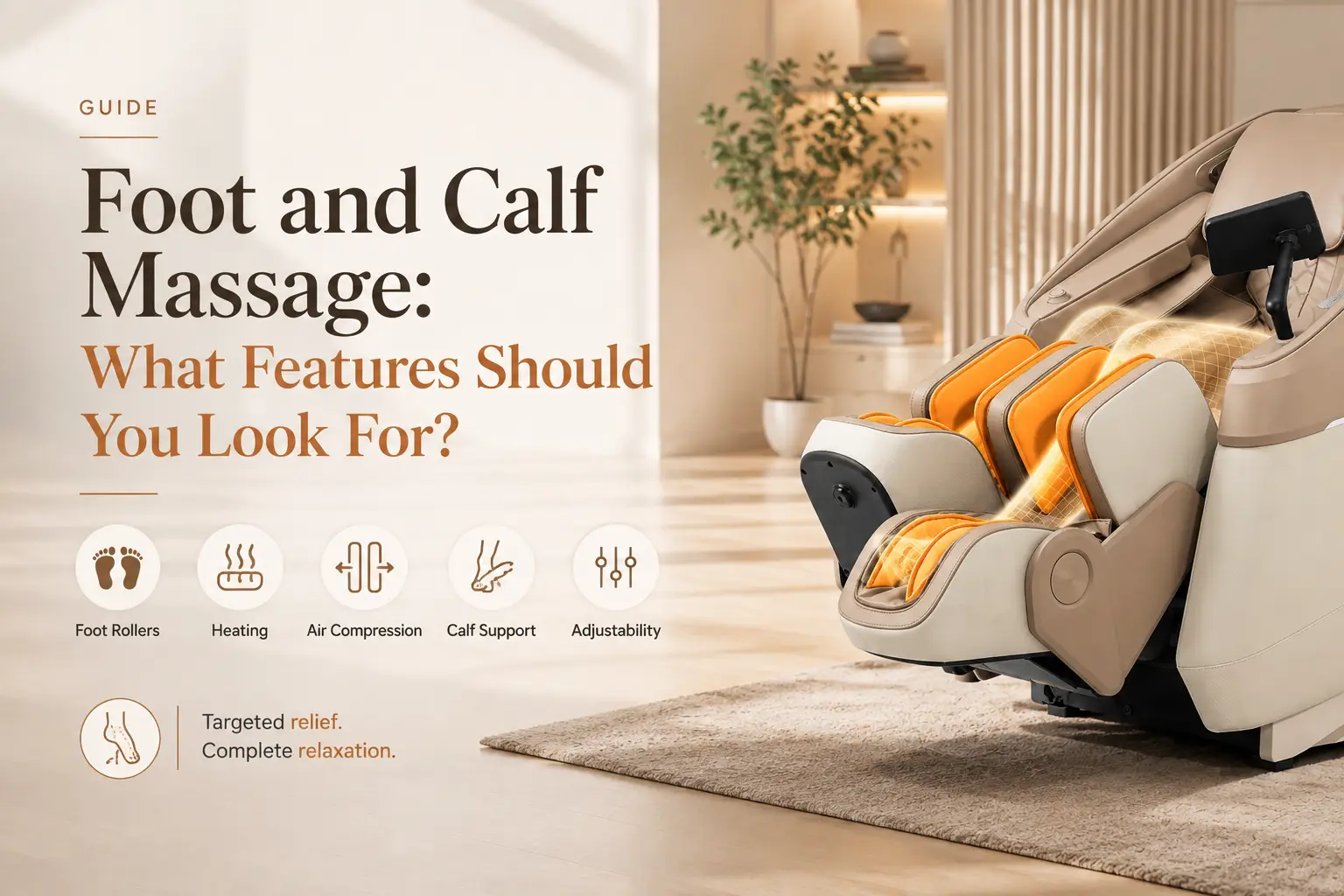
Foot and Calf Massage in a Massage Chair: What Features Should You Look For?
After a long day of sitting, standing, walking or commuting, the feet and calves are often among the first areas where people want to relax. This is why lower-body massage has become an important feature for many people comparing massage chairs for home use.
However, not every massage chair with foot and calf massage provides the same experience.
Some massage chairs focus mainly on foot rollers. Others use airbags around the feet and calves, while more advanced designs may combine rollers, air compression, adjustable intensity and lower-body stretching functions.
So, instead of asking only, “Does this massage chair have foot massage?”, it is more useful to ask:
How does the foot and calf massage system actually work, and will it suit the people using the chair?
Here are the key features worth comparing before choosing a massage chair.
How Does Foot and Calf Massage Work in a Massage Chair?
A modern massage chair may use several technologies together to create a lower-body massage experience.
The most common are foot rollers and airbags.
1. Foot Rollers
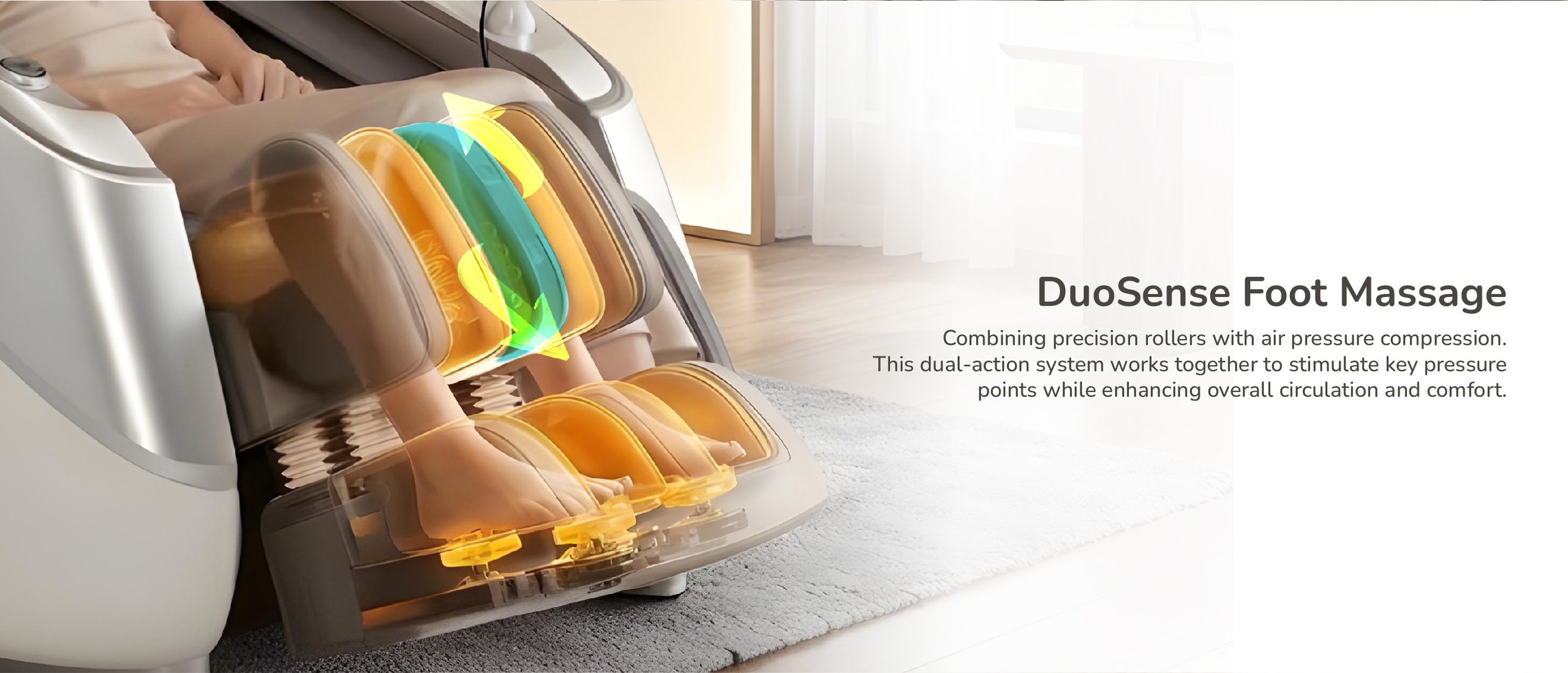
Foot rollers are mechanical components located underneath the feet. Depending on the design of the massage chair, these rollers may move underneath different parts of the sole to create rolling, pressing or kneading sensations.
When comparing foot rollers, don’t judge them only by how strong they feel.
Look at the overall experience, including:
- How much of the sole the rollers cover
- Whether the arch receives comfortable contact
- Whether the pressure can be adjusted
- Whether both feet sit naturally inside the footrest
- Whether airbags help keep the feet comfortably positioned
- Whether the lowest intensity is comfortable enough for regular use
A powerful foot roller is not automatically a better foot roller. For everyday home use, coverage, adjustability and comfort can be more important than maximum intensity.
Calf and Leg Airbags
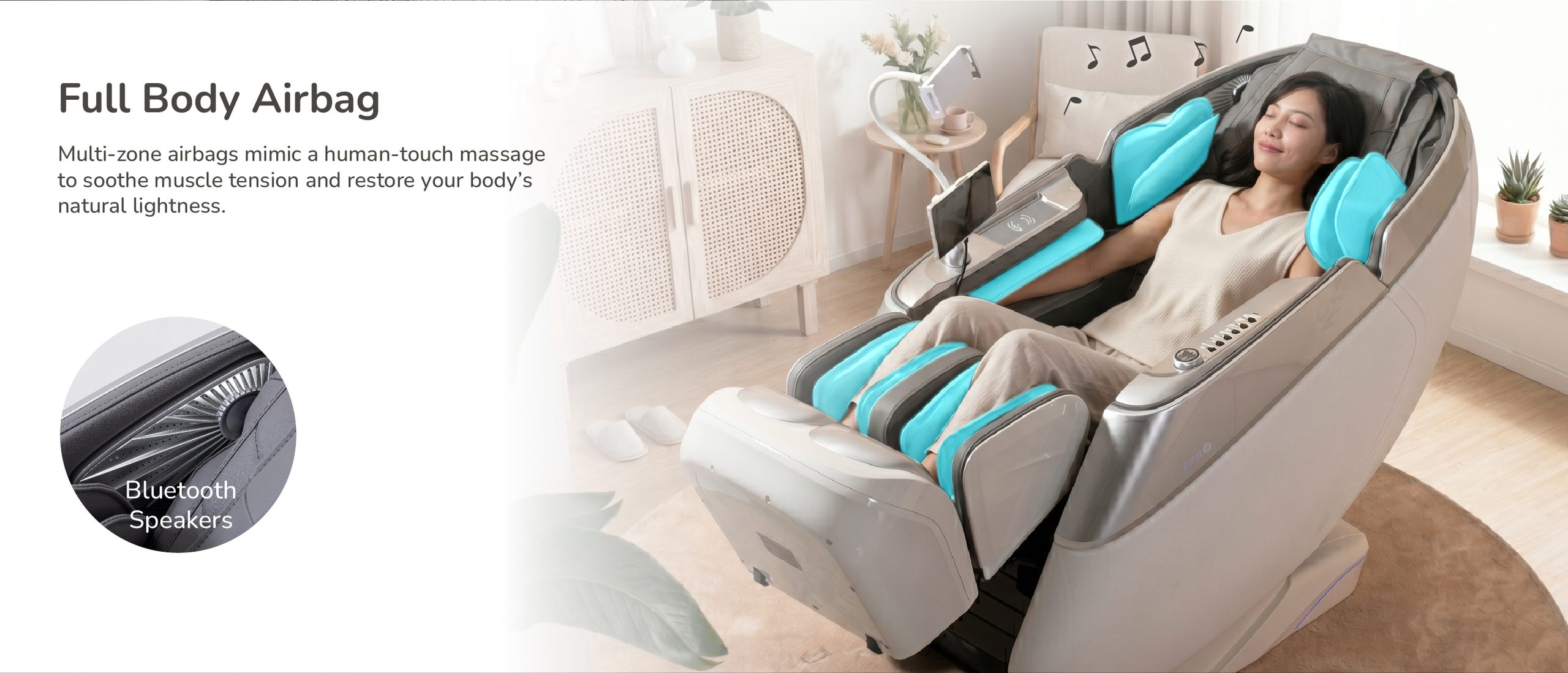
While rollers usually work underneath the feet, massage chair airbags are commonly positioned around the feet, ankles, calves and other areas of the body.
The airbags inflate and release to create a compression-style sensation.
For the calves, this can create a different experience from mechanical rollers because the pressure surrounds a larger area of the lower leg.
When testing a chair, pay attention to where the airbags make contact.
Ask yourself:
- Does the compression cover enough of my calves?
- Does it feel balanced on both legs?
- Can I adjust the pressure?
- Is the lowest setting gentle enough?
- Does the pressure remain comfortable after several minutes?
It is also worth remembering that more airbags do not automatically mean a better massage chair. Placement, coverage, pressure control and how the airbags work with other functions are equally important.
Foot Rollers and Airbags Working Together
For a more complete lower-body massage, many chairs combine foot rollers with air compression.
The rollers work underneath the feet while airbags apply pressure around the feet and calves. Depending on the massage program, these functions may operate together with reclining or stretching movements.
This coordination can make a significant difference to the overall experience.
Rather than comparing individual specifications in isolation, consider how the entire lower-body system works together.
7 Features to Look For in a Massage Chair With Foot and Calf Massage
If foot and calf massage is one of your priorities, these are seven areas worth checking before purchasing.
1. Foot Roller Coverage
Start with the most obvious feature: the foot rollers.
Different massage chairs use different roller mechanisms and layouts, so the sensation can vary significantly from one model to another.
When testing the chair, notice which parts of your feet receive contact, particularly around the:
- Forefoot
- Mid-foot
- Arch
- Heel area
You should also test more than one intensity setting.
The strongest setting may feel impressive during a short demonstration, but that does not necessarily mean it will be the setting you want to use regularly at home.
For long-term use, look for a balance between coverage, pressure and comfort.
2. Calf Airbag Coverage
Next, look at how the airbags surround your lower legs.
Good calf coverage should feel balanced rather than concentrated on a small area.
This is especially important if the massage chair will be shared among family members because everyone may have different preferences for air pressure.
Try several settings rather than testing only the default program.
If possible, compare how the airbags feel when used independently and when combined with the foot rollers.
3. Adjustable Massage Intensity
Massage preference is highly personal.
One person may enjoy stronger foot pressure, while another may prefer a much gentler massage.
This makes adjustability particularly important in a massage chair for home use.
Depending on the model, you may be able to adjust:
- Foot roller intensity
- Airbag pressure
- Massage speed
- Automatic programs
- Target massage areas
- Roller strength
If several people in your household plan to use the chair, having multiple adjustment levels can make the massage chair much more practical.
4. Footrest Length and Fit
Footrest fit is one of the easiest features to overlook when shopping for a massage chair.
Even an advanced lower-body massage mechanism may not feel right if your legs do not align properly with it.
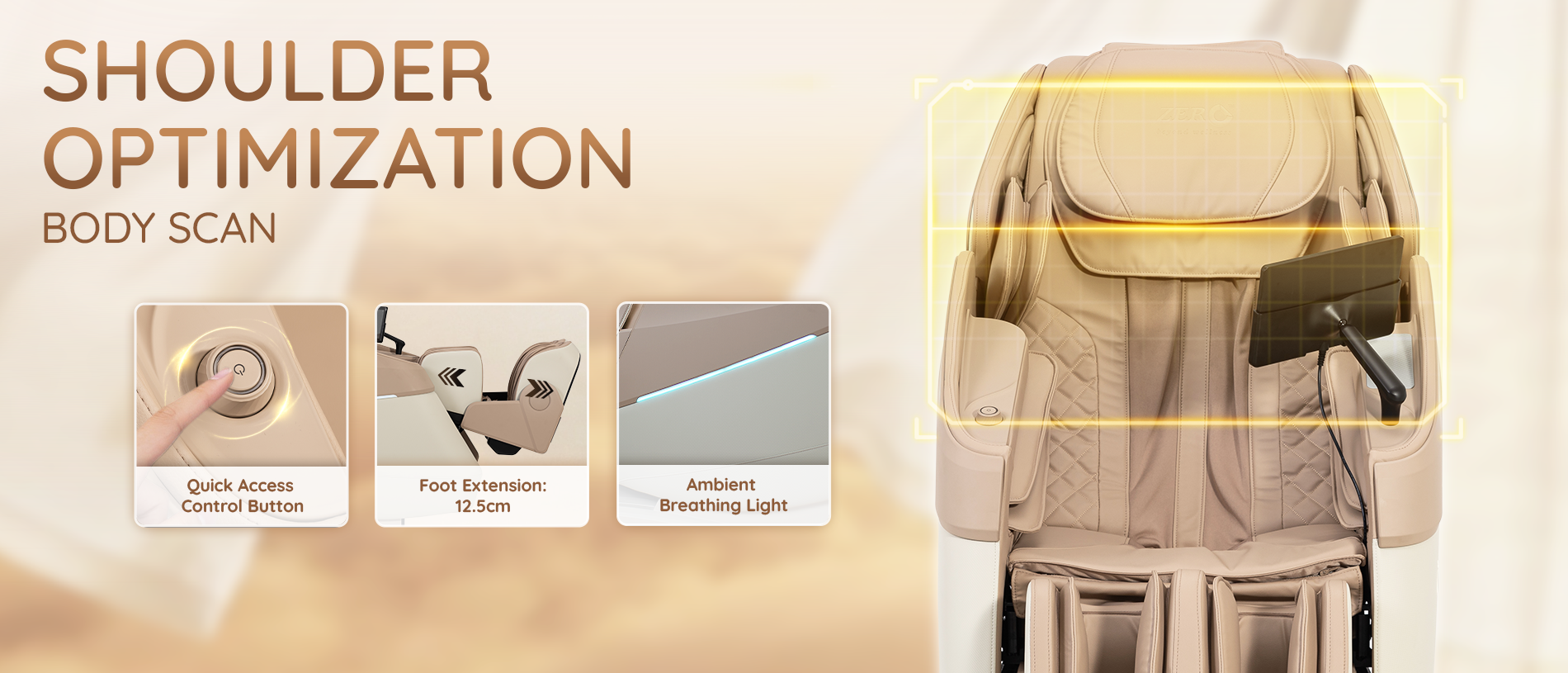
Some massage chairs provide an adjustable or extendable footrest to accommodate users of different heights.
When sitting in the chair, check whether:
- Your knees feel comfortable
- Your heels sit naturally inside the footrest
- Your feet are not excessively compressed
- Your calves align with the massage area
- Your legs can remain relaxed
- Other family members can fit comfortably
This is one reason why comparing massage chairs in person can be useful.
A specification sheet can tell you what technology is inside the chair, but it cannot tell you exactly how that technology will fit your body.
5. Heel and Ankle Support
When evaluating lower-body massage, don’t focus only on the middle of the foot and calf.
The way the footrest holds the heel and ankle can also affect the overall experience.
This becomes particularly important when the massage chair includes stretching movements.
During a stretching program, the feet may need to remain securely positioned while the chair or footrest changes position.
The support should feel secure without creating uncomfortable pressure.
6. Lower-Body Stretching Functions
Some massage chairs go beyond conventional foot massage by incorporating stretching movements.
Depending on the chair, airbags may hold parts of the lower body while the footrest or reclining mechanism moves. This can create a stretching sensation through areas such as the feet, ankles, calves and legs.
However, not every massage chair stretch program works in the same way.
If stretching is an important feature for you, check:
- Which parts of the lower body are supported
- How firmly the airbags hold the legs
- Whether stretching intensity can be adjusted
- How the footrest moves
- Whether the movement feels natural for your body
- Whether different stretching programs are available
The best way to understand these differences is to experience them rather than relying only on feature names.
Massage chair stretching should also be viewed as a wellness and relaxation function, not as a replacement for professional medical treatment or rehabilitation.
7. Full-Body Massage Integration
Your feet and calves are only part of the overall massage experience.
A good full-body massage chair may coordinate lower-body massage with features such as:
- Back rollers
- Shoulder massage
- Arm airbags
- Hip and thigh airbags
- Reclining positions
- Zero-gravity positions
- Heating functions
- Body scanning
- Automatic massage programs
For example, an automatic relaxation program may recline the chair while activating the back massage, calf compression and foot rollers together.
This creates a more connected experience than simply activating one function at a time.
Therefore, when comparing massage chairs, look beyond the number of features. Pay attention to how well those features work together.
Foot Rollers vs Airbags: What’s the Difference?
Foot rollers and airbags perform different roles, and one is not necessarily better than the other.
Foot rollers generally provide mechanical movement underneath the soles. Depending on the mechanism, they can create rolling, kneading or pressing sensations.
Airbags, on the other hand, inflate and release around areas such as the feet and calves. This produces broader compression and can also help keep the lower body positioned during certain massage or stretching programs.
In simple terms:
- Foot rollers: Focus on mechanical massage underneath the feet
- Airbags: Provide compression around the feet and calves
- Combined system: Uses both technologies for a more complete lower-body experience
For many buyers, the question shouldn’t be “rollers or airbags?”
A better question is how effectively the massage chair combines them.
Who May Enjoy Foot and Calf Massage?
Foot and calf massage can be appealing to many types of users, particularly those who want to relax after their daily routines.
1. Office Workers
People who spend much of the working day sitting at a desk may appreciate having a convenient relaxation routine after returning home.
Instead of arranging a separate massage session, a home massage chair makes it possible to sit down and enjoy a short massage whenever convenient.
2. People Who Spend Long Hours Standing
Retail workers, sales staff, hospitality employees and others who spend much of their day standing may particularly enjoy focusing their massage session on the feet and calves.
3. Active Individuals
People who walk frequently, travel, shop, exercise recreationally or simply have active daily routines may also appreciate lower-body relaxation.
4. Families Looking for Home Wellness
A massage chair can also become part of a family’s home wellness space.
However, if multiple people will use the chair, adjustability becomes even more important. Different users may prefer different roller strength, air pressure, reclining positions and massage programs.
It is important to keep these benefits in perspective. Massage chairs are consumer wellness products designed primarily for comfort and relaxation. They should not be considered devices for diagnosing, curing or treating medical conditions.
If you have an injury, persistent pain, circulation concerns or another health condition, seek advice from an appropriate healthcare professional before relying on massage as part of your routine.
Why You Should Test Foot and Calf Massage Before Buying
Online research is useful for narrowing down your choices, but foot and calf massage can be difficult to judge from specifications alone.
Imagine two massage chairs that both advertise:
- Foot rollers
- Calf airbags
- Adjustable intensity
- Leg stretching
- Zero gravity
- Automatic programs
On paper, they may appear very similar.
Once you sit in them, however, the experience can be completely different.
One footrest may fit your height better. One roller mechanism may provide more comfortable arch contact. One chair’s airbags may feel gentle, while another feels considerably stronger.
This is why an in-person test is valuable.
When visiting a showroom, try this simple process:
- Sit naturally and allow the chair to adjust around you.
- Start with a lower massage intensity.
- Test the foot rollers separately if possible.
- Increase the roller intensity gradually.
- Compare different airbag pressure levels.
- Try a full-body automatic program.
- Test a stretching program if the chair provides one.
- Check whether your heels and calves remain comfortably positioned.
- Stay in the chair for several minutes rather than judging it immediately.
Most importantly, compare more than one massage chair.
This gives you a much better reference point for understanding differences in pressure, fit, coverage and overall comfort.
What About Body Scan and Zero Gravity?
Although body scanning and zero gravity are not specifically foot-massage technologies, they can affect the overall massage experience.
1. Body Scan
Some massage chairs use body scanning or body mapping systems to identify aspects of the user’s body position before beginning an automatic massage.
The exact capabilities vary between models, so it is worth checking what the manufacturer’s body scan actually adjusts.
When combined with an adjustable footrest, proper positioning can help the chair provide a more personalized full-body experience.
2. Zero Gravity
Zero-gravity positioning reclines the massage chair into a supported position designed to distribute the user’s body weight differently across the chair.
When foot and calf massage operates at the same time, the user can enjoy lower-body massage while remaining reclined.
For consumers looking to build a comfortable home relaxation routine, it can be useful to test the foot massage both upright and reclined.
How to Choose the Right Foot and Calf Massage Chair
Before purchasing, use this simple checklist.
a. Foot Roller Coverage
Where do the rollers make contact with your feet?
b. Calf Coverage
Do the airbags comfortably surround enough of the lower legs?
c. Intensity Adjustment
Can you make the foot rollers and airbags stronger or gentler?
d. Footrest Fit
Does the chair accommodate your height naturally?
e. Heel and Ankle Support
Do your feet remain securely and comfortably positioned?
f. Stretching Functions
Does the chair offer lower-body stretching, and do you enjoy how it feels?
g. Full-Body Integration
Do the foot and calf systems work naturally with the chair’s back massage, airbags and automatic programs?
h. Ease of Use
Can you easily adjust the functions you use most often?
i. Family Suitability
Can different household members adjust the chair to their preferences?
j. Personal Comfort
Most importantly, would you actually want to use the chair regularly?
The best massage chair is not necessarily the model with the longest specification list.
It is the chair that combines the right features with a massage experience that feels comfortable for you.
Compare Zero Healthcare Massage Chairs in Malaysia
If foot and calf massage is one of your priorities, the easiest way to understand the differences is to compare actual chairs.
Zero Healthcare offers a range of massage chairs in Malaysia with different combinations of massage rollers, airbags, foot massage systems, reclining functions and automatic programs.
Rather than choosing based only on online specifications, consider which features matter most to your daily routine.
For example, an office worker may prioritize comfortable full-body relaxation after work, while someone who spends long hours standing may pay more attention to the foot and calf section.
A family may place greater importance on adjustable intensity and accommodating different body sizes.
There is no single feature combination that is ideal for everyone.
That’s why testing different models is important.
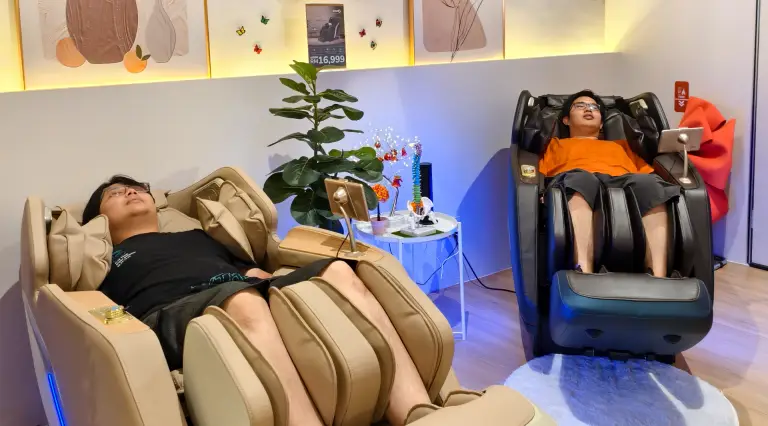
You can use the Zero Healthcare Store Locator to find a nearby showroom and experience different massage chairs before deciding.
During your visit, pay particular attention to:
- Foot roller comfort
- Calf airbag coverage
- Footrest fit
- Intensity adjustment
- Stretching movements
- Zero-gravity positioning
- Full-body massage programs
Try the functions you expect to use most often rather than focusing only on the most impressive feature during a short demonstration.
Final Thoughts
A good massage chair with foot and calf massage is about much more than having rollers underneath the feet.
The complete experience comes from how the foot rollers, calf airbags, footrest, intensity settings, stretching functions and full-body massage system work together.
When comparing massage chairs, remember these key points:
- Look for comfortable foot roller coverage
- Check how well the airbags surround your calves
- Make sure massage intensity can be adjusted
- Test whether the footrest fits your height
- Consider heel and ankle support
- Explore lower-body stretching if it matters to you
- See how the lower-body system integrates with full-body programs
- Test the chair personally whenever possible
Specifications can help you create a shortlist, but comfort is personal.
If you’re researching your next massage chair, explore Zero Healthcare’s massage chair range and compare the features that matter most to you.
For an even better understanding, showroom near you and experience different foot, calf and full-body massage functions in person before making your decision.
Frequently Asked Questions
A massage chair may use foot rollers, airbags or a combination of both to create rolling, pressing, kneading and compression sensations around the feet. The exact experience depends on the chair’s footrest design and massage mechanism.
Foot rollers are worth considering if foot massage is a priority. However, don’t judge a massage chair only by whether it has rollers. Coverage, adjustable intensity, footrest fit and integration with airbags can be equally important.
Foot rollers provide mechanical movement underneath the feet, while calf airbags inflate and release around the lower legs to create compression. Many full-body massage chairs combine both technologies.
Some massage chairs include lower-body stretching programs that combine airbags with footrest or reclining movements. The exact stretching motion varies by model, so testing the function personally is recommended.
Look for comfortable foot roller coverage, calf airbags, adjustable intensity, a properly fitting footrest, heel and ankle support and suitable stretching functions. You should also consider how these features integrate with the chair’s full-body massage programs.