


Why Are We More Prone to Sprains as We Get Older?
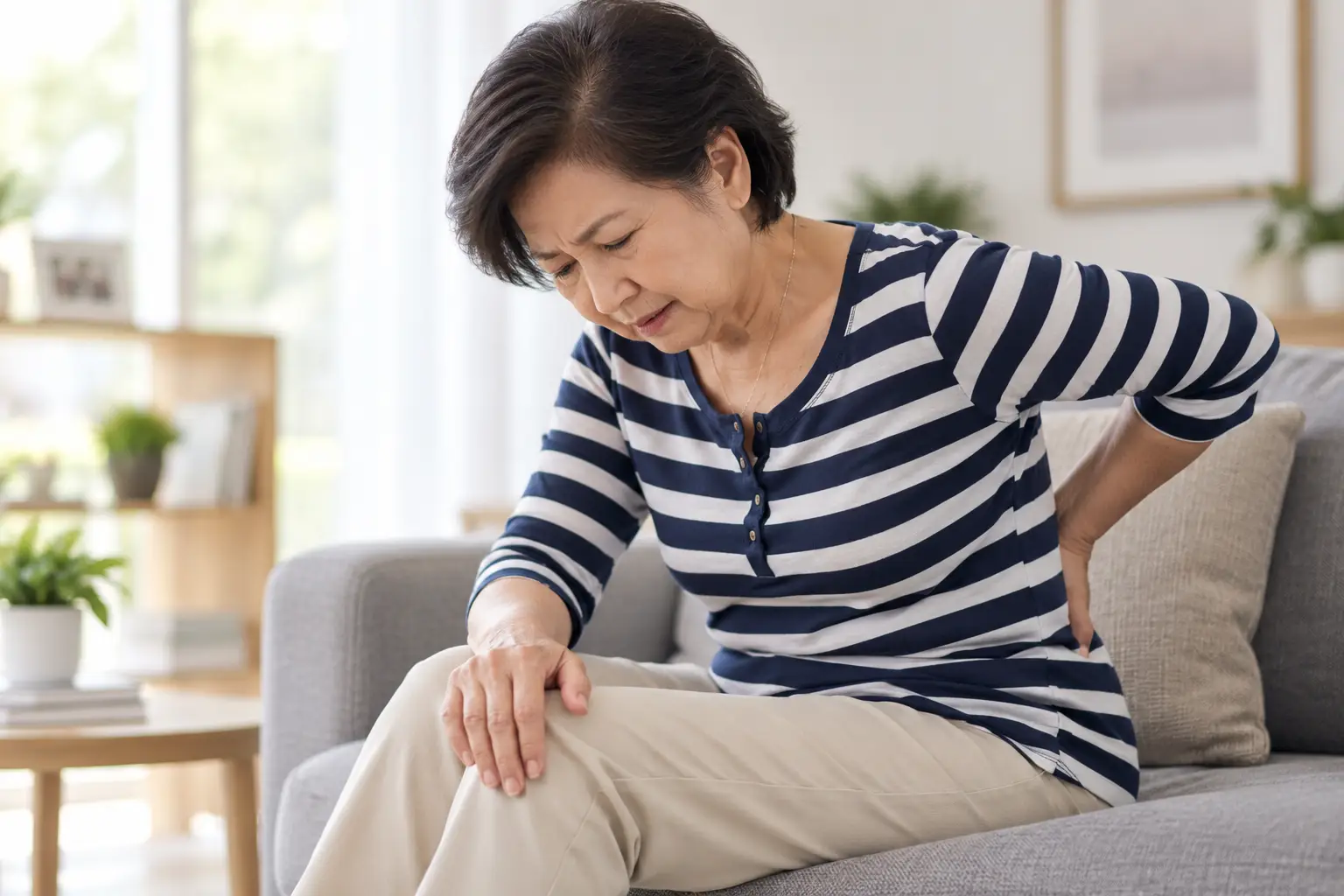
Have you ever stepped awkwardly, twisted your ankle or made a sudden movement and wondered, “Why does this seem to happen more easily than it used to?”
Becoming more prone to sprains as you get older can be influenced by several age-related changes, including reduced muscle strength, changes in balance and decreased flexibility. Changes in gait and stability may also increase the risk of falls and injuries in older adults.
The encouraging part is that ageing does not mean you simply have to accept becoming weak or injury-prone.
Regular strength, balance and flexibility exercises can help maintain physical function. Recovery habits—including adequate rest and appropriate massage—can complement an active lifestyle by helping muscles feel more relaxed and comfortable.
Here’s what you should know.
What Exactly Is a Sprain?
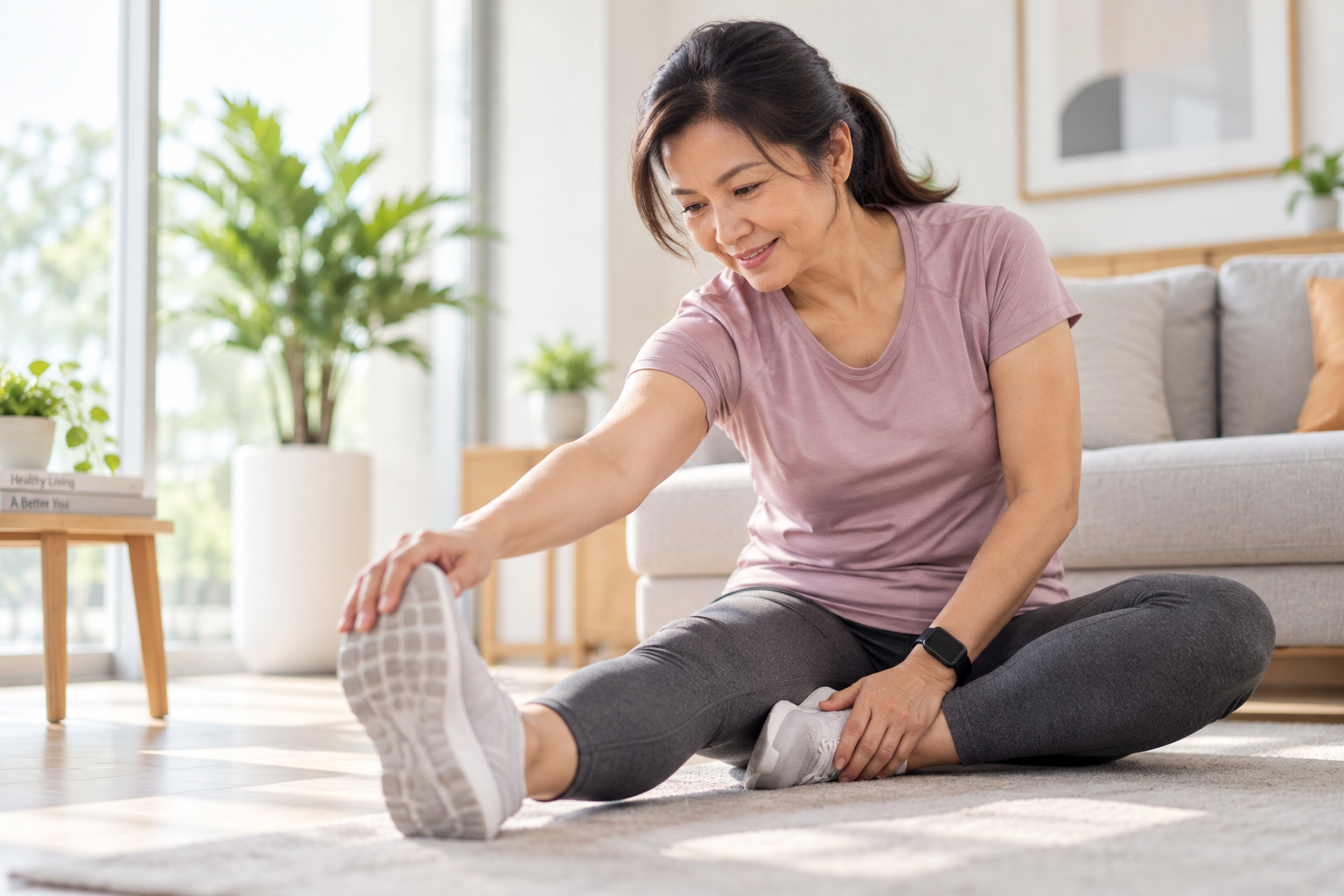
A sprain is an injury in which a ligament—the tissue connecting bones around a joint—is stretched or torn. Sprains commonly occur when a joint is twisted or forced into an unnatural position. Ankles and wrists are common locations.
A sprain is different from a strain.
- Sprain: affects a ligament.
- Strain: affects a muscle or tendon.
This distinction matters because people sometimes describe almost any muscle or joint discomfort as a “sprain.”
Pain after activity doesn’t necessarily mean you have one. If there is significant swelling, bruising, severe pain or difficulty moving or putting weight on the joint, appropriate medical assessment may be needed.
Why Are Sprains More Likely as You Get Older?
There isn’t one single reason. Instead, several physical changes can combine to affect how well your body handles an unexpected movement.
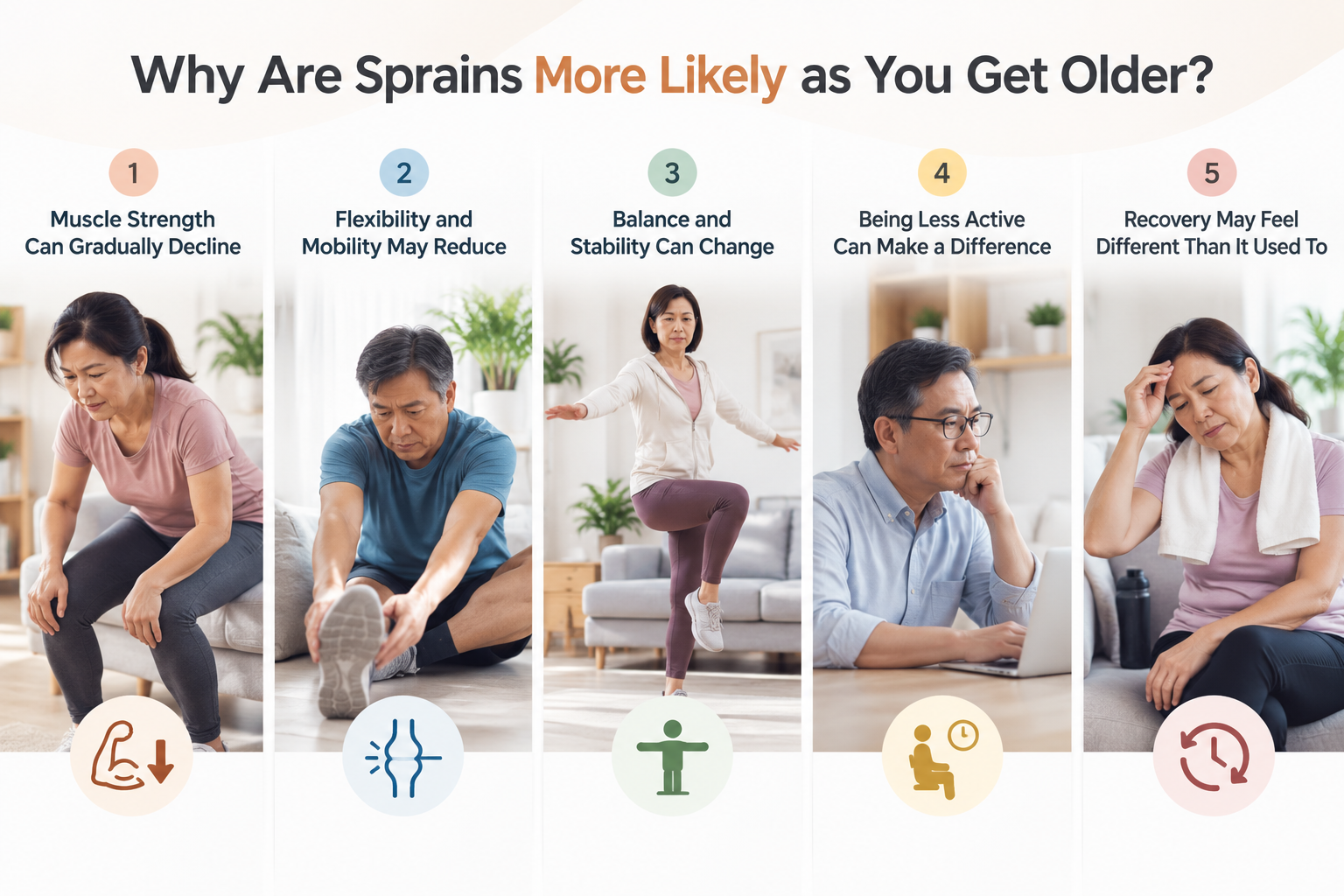
1. Muscle Strength Can Gradually Decline
Muscles play an important role in supporting and stabilising joints.
As we age, changes in muscle mass and strength can make everyday activities feel more demanding—particularly when physical activity has also decreased.
Think about stepping off a kerb unexpectedly.
Strong leg and hip muscles help you quickly stabilise yourself. If those muscles are weaker, recovering from the same awkward step may become more difficult.
This is one reason strength training becomes increasingly important as we get older.
MedlinePlus recommends activities such as lifting weights or using resistance bands to help older adults build strength.
2. Flexibility and Mobility May Reduce
Do you feel noticeably stiffer when getting out of bed or standing after sitting for a long time?
Limited movement and inactivity can contribute to muscle stiffness and reduced mobility. MedlinePlus notes that people who do not move independently or stretch their muscles through exercise can develop muscle contractures.
When your body is less flexible, sudden movements may feel harder to accommodate comfortably.
For example, turning quickly while playing badminton or reaching awkwardly for something on the floor may require a range of movement that you don’t regularly use.
Maintaining mobility therefore matters—not only for sports, but for everyday life.
3. Balance and Stability Can Change
Sometimes the problem isn’t the ankle itself.
It’s the moment before the ankle twists.
Age-related changes in gait, stability and balance can contribute to falls and injuries.
That means improving balance can be an important part of injury prevention.
Simple activities that challenge balance safely, together with exercises strengthening the legs, hips and core, can help maintain physical stability.
4. Being Less Active Can Make a Difference
Ageing and inactivity are not the same thing.
But they often happen together.
A busy office worker, for example, may exercise regularly in their 20s but gradually become more sedentary in their 40s and 50s. Over time, they may lose some strength, mobility and physical conditioning.
Then comes the weekend badminton match.
The mind remembers what it could do 15 years ago. The body may not be equally prepared.
Maintaining regular activity rather than relying on occasional intense exercise can therefore be important as we age.
5. Recovery May Feel Different Than It Used To
Many people notice that after physical activity, their body feels stiff or tired for longer than it once did.
That doesn’t necessarily indicate an injury.
However, it does make recovery habits increasingly valuable.
Instead of viewing recovery as something only athletes need, think of it as part of maintaining an active lifestyle: appropriate rest, sleep, hydration, gentle movement and, when suitable, massage can all form part of a broader wellness routine.
How Can You Reduce Your Risk of Sprains as You Age?
There is no way to prevent every accidental injury, but you can work on factors that help your body remain strong, mobile and stable.
1. Keep Your Muscles Strong
If your goal is stronger muscles, exercise—not massage—is the key tool.
Resistance training may include:
- Resistance bands
- Bodyweight exercises
- Light weights
- Sit-to-stand exercises
- Exercises targeting the legs and hips
Muscle-strengthening activities can support everyday functions such as climbing stairs and carrying groceries.
If you’re older, have an existing medical condition or haven’t exercised for a long time, consider asking a healthcare professional about an appropriate starting point.
2. Work on Balance
Balance training becomes particularly relevant as we age.
MedlinePlus notes that balance exercises can help prevent falls, while exercises that strengthen the legs, hips and lower back can also improve balance.
Depending on your ability, exercises might include controlled single-leg standing or other movements recommended by a physiotherapist or qualified fitness professional.
Safety should always come first.
3. Maintain Flexibility and Mobility
You don’t need to become extremely flexible.
The objective is simply to maintain enough comfortable movement for everyday activities.
Regular stretching and mobility exercises may help you stay limber.
Pay particular attention to areas that tend to become tight after prolonged sitting, such as the hips, legs, shoulders and back.
4. Warm Up Before More Demanding Activities
Going directly from sitting in the car to an intense badminton match isn’t ideal.
Give your body a few minutes to prepare.
Start with light movement and gradually increase intensity before performing more demanding movements.
This becomes especially relevant if you spend much of your week sitting at a desk.
5. Give Your Body Time to Recover
Being active is important, but so is recognising when your body needs recovery.
After a demanding day or workout, your routine might include:
- Cooling down gradually.
- Drinking enough water.
- Gentle mobility or stretching.
- Getting adequate sleep.
- Allowing tired muscles time to recover.
- Using massage for relaxation when appropriate.
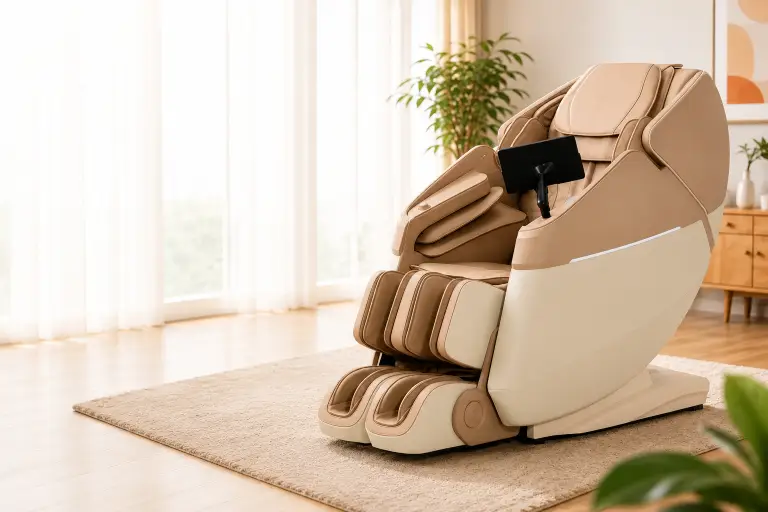
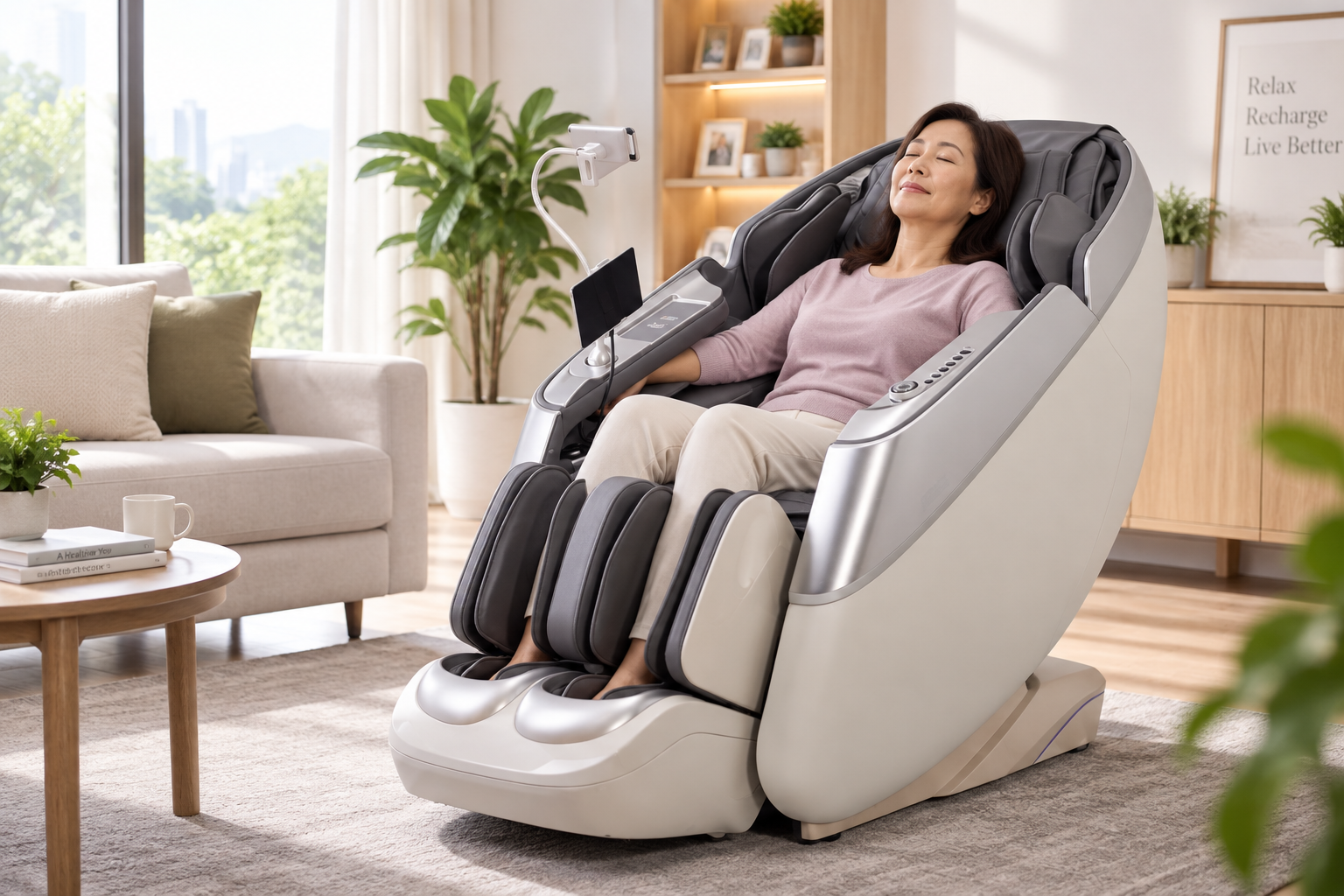
This is where a massage chair for home can become a convenient part of a regular wellness routine.
Where Does Massage Fit Into Healthy Ageing?
Massage works primarily with muscles and other soft tissues and is commonly used to promote comfort and relaxation.
Evidence for massage varies depending on the condition being studied. The U.S. National Center for Complementary and Integrative Health (NCCIH), for example, reports that massage may provide short-term benefits for some types of pain, but evidence is not strong for many conditions.
So it’s important to keep expectations realistic.
A massage chair may be useful as a wellness and relaxation tool for people who:
- Feel muscular tension after work
- Spend long periods sitting
- Want convenient massage at home
- Want to relax after physical activity
- Prefer having a regular home recovery routine
But massage should complement—not replace—physical activity.
Can a Massage Chair Make Your Muscles Stronger?
No. A massage chair does not directly strengthen muscles in the way resistance exercise does.
This is an important distinction.
Massage primarily acts on soft tissues to provide a massage and relaxation experience. Muscle strength, meanwhile, is developed by challenging muscles through physical activity such as resistance training.
A useful way to think about the relationship is:
| Goal | More Appropriate Approach |
|---|---|
| Build muscle strength | Resistance/strength exercise |
| Improve balance | Balance and stability exercises |
| Maintain flexibility | Mobility and flexibility exercises |
| Relax tight or tired muscles | Massage may help |
| Daily relaxation at home | Massage chair may be convenient |
| Treat an injury | Appropriate healthcare assessment |
Rather than expecting a massage chair to make muscles stronger, consider it part of the recovery and relaxation side of your overall routine.
For example:
Exercise → Recovery → Rest → Repeat
A massage chair can fit into the recovery or relaxation stage, while regular physical activity does the actual work of maintaining strength.
Should You Use a Massage Chair After a Sprain?
This requires caution.
Do not use a massage chair as a treatment for a newly sprained or injured area without appropriate medical advice.
A fresh sprain can involve pain, swelling, bruising and difficulty moving the joint. Initial management may involve rest, ice and other measures depending on the injury and professional guidance.
Massage should also not be applied aggressively to an acutely injured area simply because it hurts.
If you have:
- Significant swelling
- Severe or worsening pain
- Extensive bruising
- Inability to bear weight
- Difficulty moving the joint
- Repeated sprains
- Uncertainty about whether the injury is a sprain, strain or fracture
seek professional medical advice rather than relying on massage.
A massage chair is better viewed as part of your regular wellness routine when you’re otherwise well, not an emergency treatment for an acute injury.
Making Massage Part of Your Home Wellness Routine
For many adults, one challenge isn’t understanding that recovery matters.
It’s finding time for it.
Having access to a massage chair at home can make relaxation easier to incorporate into everyday life—after work, after appropriate exercise or whenever you simply want time to unwind.
Different massage chairs also provide different experiences, so comfort should be evaluated personally.
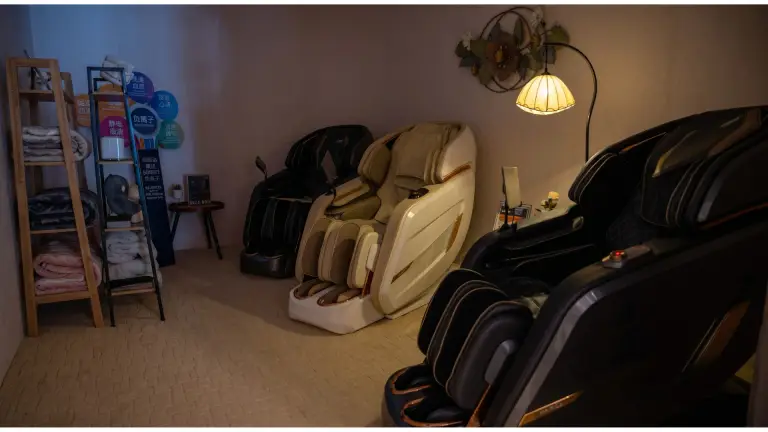
At Zero Healthcare, customers can explore different massage chair options based on their preferences, body size and desired massage experience.
If you’re buying for yourself or an older family member, trying the chair before deciding can be especially useful.
Pay attention to:
- Whether getting in and out feels comfortable
- Massage intensity
- Back and leg positioning
- Ease of operating the controls
- Available massage programmes
- Overall seating comfort
You can use the Zero Healthcare store locator to find a nearby showroom and experience different models personally.
Stay Active, Strong and Comfortable as You Age
Becoming older doesn’t mean you have to stop moving because you’re afraid of getting injured.
Quite the opposite.
Maintaining strength, balance and flexibility through regular physical activity is one of the most useful things you can do to support mobility as you age.
And recovery can be part of that lifestyle too.
A massage chair won’t strengthen muscles or prevent every sprain. What it can offer is a convenient way to incorporate massage, muscle relaxation and downtime at home as part of a broader wellness routine.
The goal isn’t simply to feel younger.
It’s to keep your body prepared for the things you still want to do.
Whether that’s travelling, playing badminton, exercising, spending time with your family—or simply moving confidently through everyday life.
If you’d like to explore how home massage could fit into your routine, compare Zero Healthcare massage chairs or find your nearest Zero Healthcare showroom to try different options in person
Frequently Asked Questions
Age-related changes in muscle strength, flexibility, balance and gait can affect stability and the body’s ability to respond to sudden movements. Staying physically active and maintaining strength and balance can help support mobility as you age.
You cannot prevent every accidental sprain, but maintaining muscle strength, balance and flexibility through appropriate exercise can help support physical stability. Older adults or people with health conditions should discuss suitable exercise with a healthcare professional.
No. Massage chairs do not directly build muscle strength. Strengthening requires appropriate physical activity such as resistance exercises. A massage chair is better used for massage, relaxation and supporting a comfortable recovery routine.
Massage may provide short-term relief for some types of pain and can promote relaxation, although evidence varies by condition. A massage chair should therefore be considered a wellness tool rather than a medical treatment for pain or injury.
Avoid aggressively massaging a newly injured, painful or swollen area. Sprains may require rest, ice, compression or professional assessment depending on their severity. Seek medical advice for severe pain, substantial swelling, difficulty moving or bearing weight, or symptoms that do not improve.