


How to Clean Massage Chair Upholstery Safely
Massage chairs are designed for regular body contact, so their upholstery naturally collects dust, sweat, body oils and other everyday dirt over time.
Fortunately, learning how to clean massage chair upholstery is relatively straightforward. For many synthetic-leather surfaces, routine maintenance may require little more than a soft, dry cloth. When deeper cleaning is necessary, manufacturer instructions commonly recommend a well-wrung soft cloth and, where permitted, a diluted mild or neutral detergent.
The important part is knowing what not to do.
Massage chairs combine upholstery with motors, electronic controls, airbags, sensors and other components. Excessive water, harsh chemicals or unsuitable cleaning products could damage the upholstery or other parts of the chair.
Always check the owner’s manual for your particular massage chair before cleaning it, as materials and manufacturer recommendations can vary between models.
What Should You Use to Clean Massage Chair Upholstery?
For basic massage-chair cleaning, you generally do not need a large collection of cleaning products.
Depending on the instructions for your specific chair, useful items may include:
- A clean, soft cloth or microfiber cloth
- A second clean cloth for wiping away residue
- Clean water
- Mild or neutral detergent, if permitted by the manufacturer
- A dry cloth for finishing
A soft, dry cloth is often sufficient for routine dust removal.
For synthetic leather that is more heavily soiled, multiple massage-chair manufacturers recommend using a soft cloth with a diluted neutral or mild detergent solution, wringing the cloth thoroughly before wiping the surface.
The exact recommendations can differ, however, so your massage chair’s care manual should take priority over general cleaning advice.
How to Clean Massage Chair Upholstery Step by Step
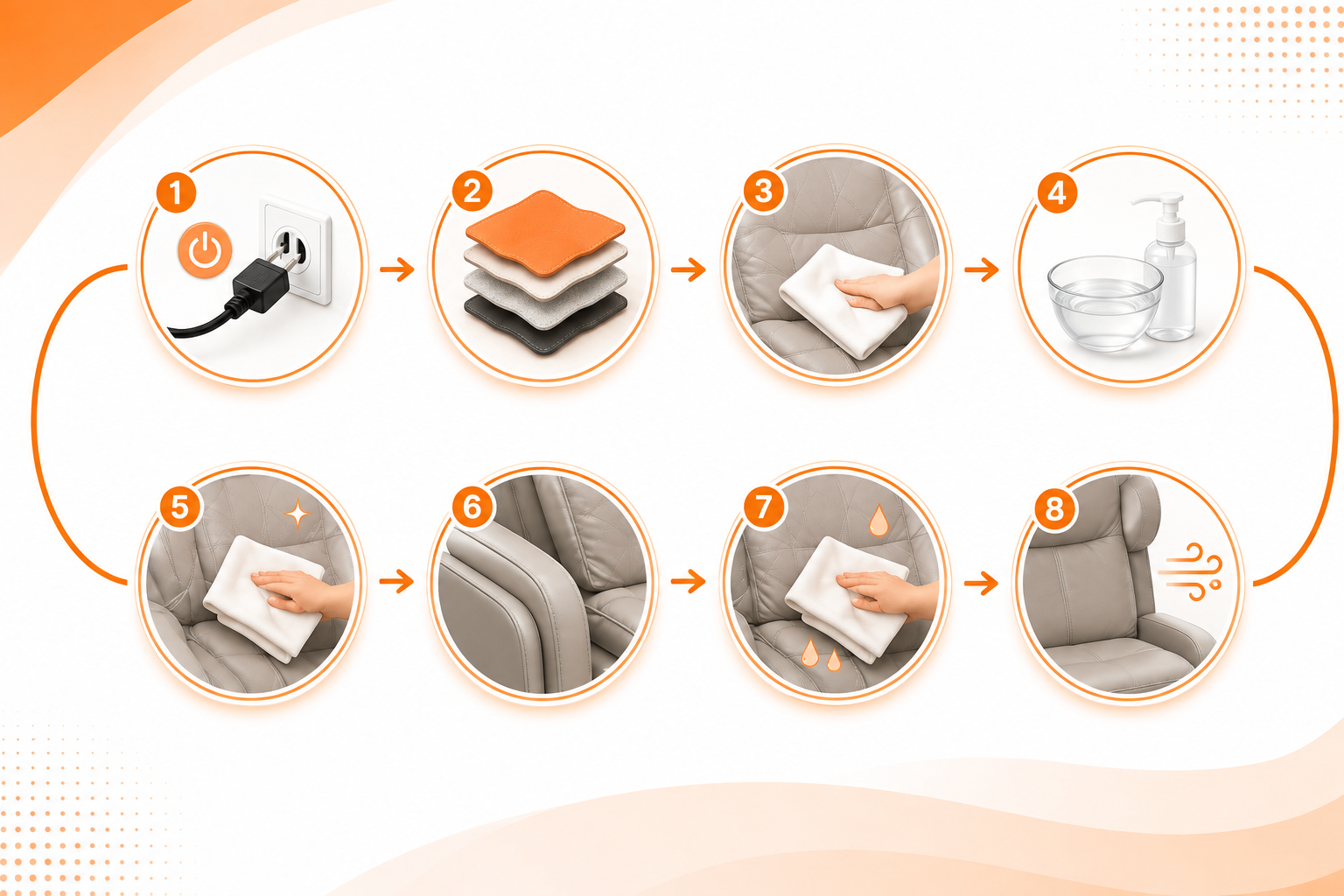
For most routine cleaning, you can follow a simple process.
Step 1: Turn Off and Unplug the Massage Chair
Before cleaning, switch the massage chair off and disconnect it from the power outlet.
This is an important safety step whenever cleaning an electrical appliance. Massage-chair manuals commonly instruct users to unplug the chair before cleaning and avoid handling the plug with wet hands.
Make sure your hands are dry when handling the power plug.
Step 2: Check the Upholstery Material and Manual
Before applying anything to the chair, identify what material you are cleaning.
Massage chairs may use materials such as:
- Synthetic leather
- Faux leather
- PVC-based upholstery
- Fabric
- Other engineered upholstery materials
Do not assume that a cleaner designed for genuine leather is automatically suitable for synthetic leather.
Look at your massage chair’s owner’s manual or care instructions for information about approved cleaning methods and products.
If you are uncertain about your Zero Healthcare massage chair, check the instructions supplied with your particular model or contact Zero Healthcare for model-specific guidance before using a cleaning product.
Step 3: Remove Loose Dust and Debris
Start with a soft, dry cloth.
Gently wipe:
- Backrest
- Headrest
- Seat
- Arm areas
- Leg and calf sections
- Side panels
- Accessible seams and creases
Seams deserve particular attention because small particles can accumulate in these areas.
Fujiiryoki, for example, specifically advises taking extra care around stitched areas because dust can collect there.
Avoid aggressively scraping or brushing the upholstery.
Step 4: Prepare a Mild Cleaning Solution if Needed
For ordinary dust, a dry cloth may be enough.
If dirt remains and your manufacturer’s instructions allow wet cleaning, use a mild or neutral detergent diluted with water according to the manufacturer’s directions.
Several massage-chair manuals describe diluted neutral detergent as an option for particularly dirty synthetic leather.
The cloth should be damp rather than dripping wet.
This distinction matters because a massage chair contains electrical and mechanical components beneath and around the upholstery.
Step 5: Wipe the Upholstery Gently
Dip your soft cloth into the approved cleaning solution and wring it out thoroughly.
Then gently wipe the affected upholstery.
Avoid:
- Soaking the surface
- Pouring water directly onto the chair
- Aggressive scrubbing
- Saturating seams
- Allowing liquid to enter openings or electronic areas
Work gradually rather than trying to wet-clean the entire chair at once.
For an unfamiliar cleaner, checking the manufacturer’s instructions and testing it on a small, inconspicuous area first is a sensible precaution.
Step 6: Pay Attention to Seams and High-Contact Areas
Some parts of a massage chair naturally need more attention because they frequently contact the user’s body.
These may include:
- Headrest
- Neck and shoulder area
- Armrests
- Seat
- Calf section
- Foot section
These areas can accumulate sweat, body oils and residue faster than decorative exterior panels.
Creases and stitching can also collect dust.
Use a soft cloth and gentle pressure rather than trying to scrape dirt from these areas.
Step 7: Remove Cleaning Residue
If detergent was used, do not simply leave it on the upholstery.
Manufacturer instructions commonly recommend following the detergent wipe with a clean cloth dampened with water and thoroughly wrung out.
This helps remove remaining cleaning solution from the surface.
You can then finish with a clean, soft, dry cloth.
Step 8: Allow the Chair to Air Dry Naturally
Allow the massage chair to dry naturally before using it again.
Avoid attempting to speed up the process with direct heat.
Several massage-chair care manuals specifically warn against using a hair dryer or similar rapid-drying method on synthetic leather.
Keep the chair unplugged until the cleaning process is complete and the relevant areas are dry.
What Should You Use to Clean Massage Chair Upholstery?
For basic massage-chair cleaning, you generally do not need a large collection of cleaning products.
Depending on the instructions for your specific chair, useful items may include:
- A clean, soft cloth or microfiber cloth
- A second clean cloth for wiping away residue
- Clean water
- Mild or neutral detergent, if permitted by the manufacturer
- A massage chair upholstery cleaning product that is suitable for your chair’s material
A soft, dry cloth is often sufficient for routine dust removal. If the upholstery requires more thorough cleaning, always check the chair’s care instructions before applying any cleaning product.
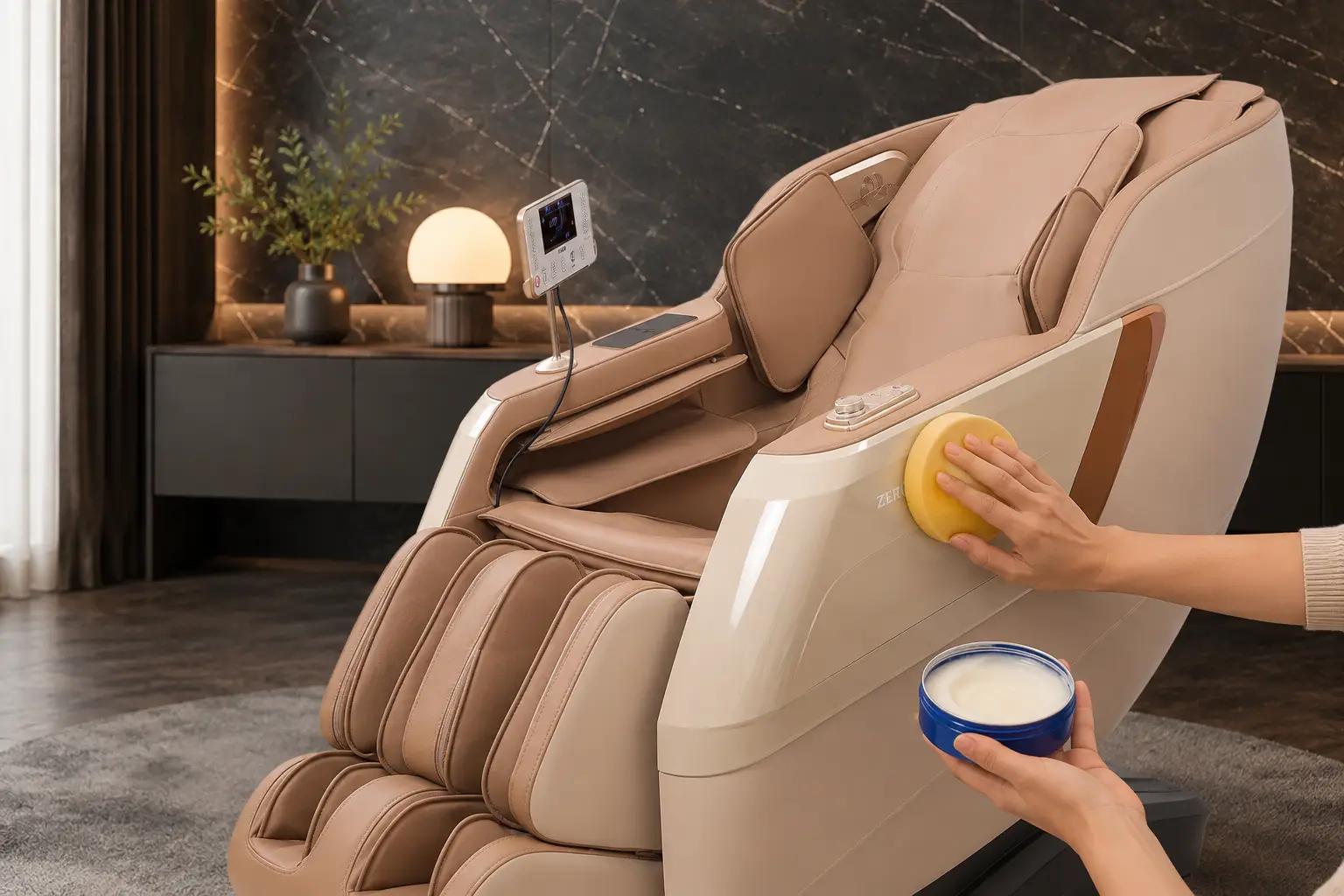
Using Zero Healthcare Cleaning Cream
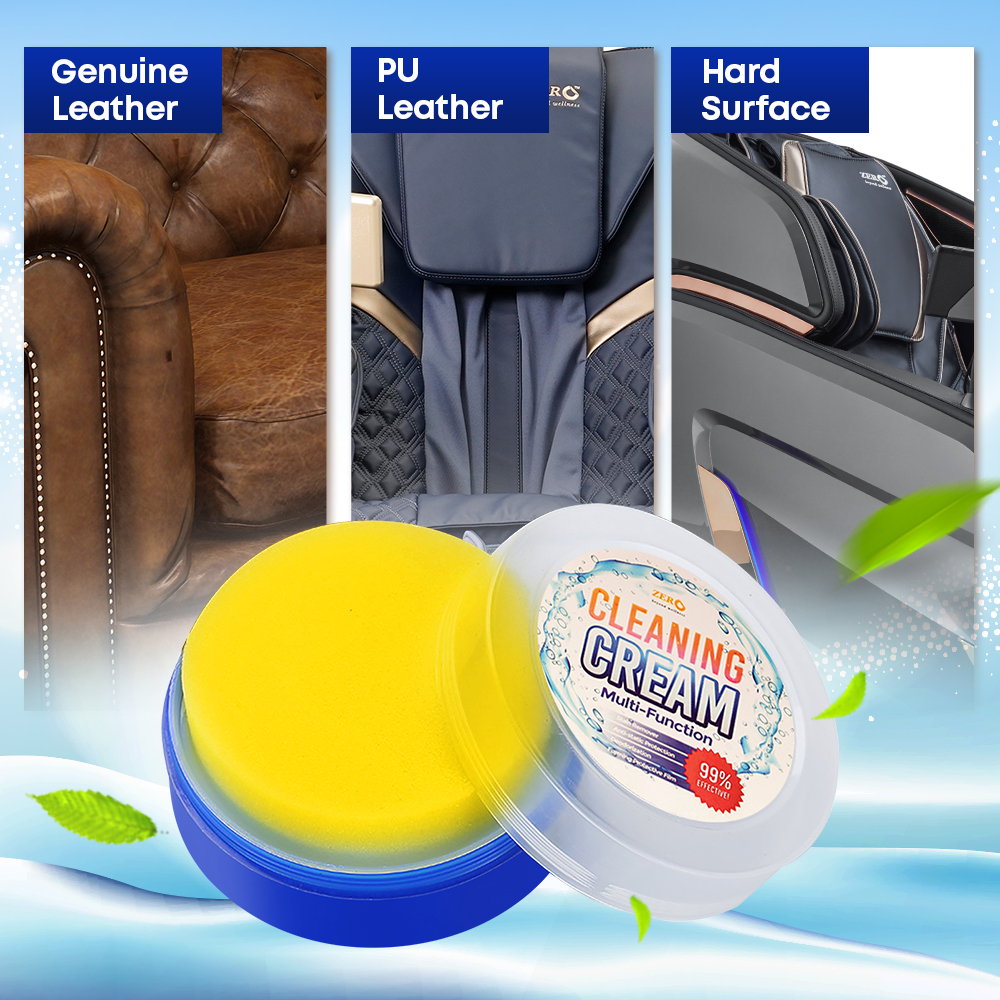
For Zero Healthcare massage chair owners, Zero Healthcare Cleaning Cream is available as a dedicated cleaning-care product that can be considered when maintaining massage chair upholstery.
Rather than using random household cleaners, alcohol-based wipes or strong solvents, using a product intended for massage chair or leather-surface care can make it easier to build a consistent maintenance routine.
However, upholstery materials can vary between massage chair models. Before applying the Cleaning Cream, check the instructions supplied with your massage chair and the directions on the cleaning product itself. If you are using it for the first time, testing a small, less-visible area before treating a larger surface is also a sensible precaution.
Explore Zero Healthcare Cleaning Cream to learn more about the product before adding it to your massage-chair care routine.
What Should You Avoid When Cleaning a Massage Chair?
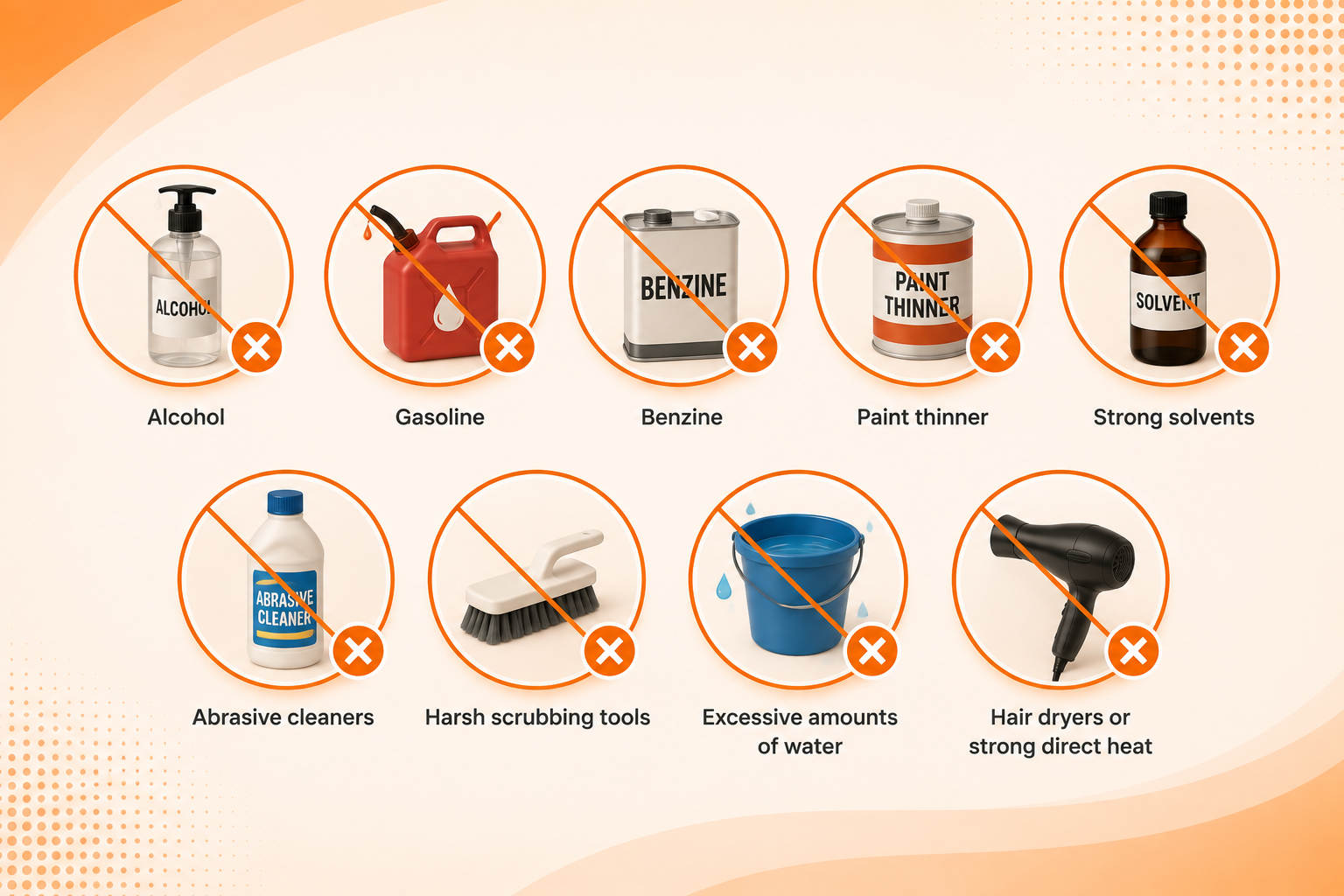
Knowing what not to use can be just as important as knowing how to clean the chair.
Unless specifically approved by your manufacturer, avoid using:
- Alcohol
- Gasoline
- Benzine
- Paint thinner
- Strong solvents
- Abrasive cleaners
- Harsh scrubbing tools
- Excessive amounts of water
- Hair dryers or strong direct heat
Manufacturer care instructions repeatedly warn against chemicals such as alcohol, gasoline/benzine and thinner because they can adversely affect massage-chair materials.
Can You Use Alcohol or Disinfectant on Massage Chair Upholstery?
Do not assume alcohol-based disinfectants are safe simply because they are commonly used on other household surfaces.
A number of massage-chair manufacturers explicitly advise against alcohol on synthetic leather or other chair components.
If sanitising is important to you, check whether your chair manufacturer recommends a particular upholstery-safe product.
Can You Use Leather Cleaner?
Possibly—but only if it is compatible with the upholstery material and permitted by the manufacturer.
“Leather cleaner” is a broad category, and a product formulated for genuine leather may not necessarily be appropriate for synthetic massage-chair upholstery.
Check both:
Your massage chair care instructions + the cleaning product label.
When in doubt, contact the manufacturer or retailer before applying it.
How Often Should You Clean Massage Chair Upholstery?
There is no single cleaning schedule that suits every household.
A chair used by several family members every day will naturally require more frequent attention than one used occasionally.
A practical routine could be:
| Cleaning Task | Suggested Approach |
|---|---|
| Light dust removal | Regularly as needed |
| High-contact areas | Wipe when visible residue develops |
| Sweat after use | Wipe promptly when necessary |
| Spills | Address immediately |
| More thorough cleaning | Periodically based on usage |
| Upholstery inspection | Check regularly for wear or damage |
Rather than following an arbitrary calendar, monitor how frequently the chair is used and its actual condition.
How to Keep Your Massage Chair Cleaner for Longer
Good habits can reduce the need for heavy cleaning.
Consider these simple practices:
Keep food and drinks away from the chair.
This reduces the likelihood of difficult spills.
Wipe the chair after particularly sweaty use.
This can be useful if you use the massage chair after exercise.
Avoid sitting in wet clothing.
Moisture can remain against the upholstery.
Be careful with strongly coloured clothing.
Some synthetic leather may pick up dye from denim or other coloured fabrics.
Keep the chair away from unsuitable environments.
Follow the manufacturer’s recommendations regarding heat, humidity and direct sunlight.
Clean small marks early.
Do not wait for dirt and residue to become heavily established.
Inspect high-contact areas periodically.
Check the headrest, backrest, seat, arms, calves and foot section.
Does Regular Cleaning Help Maintain Your Massage Chair?
Cleaning is a simple but worthwhile part of massage-chair ownership.
It helps keep the surfaces presentable and prevents dust, sweat, oils and everyday residue from accumulating unnecessarily.
Maintenance should extend beyond cleaning as well.
Occasionally check for:
- Changes in upholstery condition
- Loose or damaged coverings
- Unusual noises
- Damaged cables
- Controller problems
- Visible damage around moving sections
If something appears mechanically or electrically wrong, avoid dismantling the chair yourself unless the manufacturer’s instructions specifically permit it.
Contact the appropriate service team instead.
Choosing a Massage Chair That Is Easy to Maintain
Cleaning may not be the first consideration when comparing massage chairs, but it is worth thinking about—especially when the chair will be used frequently by multiple family members.
When evaluating a massage chair, consider:
- Upholstery material
- Ease of wiping high-contact surfaces
- Accessibility around the leg and foot sections
- Removable covers, where available
- Manufacturer cleaning instructions
- Warranty coverage
- After-sales support
- Availability of replacement parts or servicing
Zero Healthcare offers a range of massage chairs for different home-use preferences.
If you are still researching, you can explore the Zero Healthcare massage chair range and compare features before deciding which model suits your household.
For consumers who prefer to see and try a chair before buying, visiting a showroom also gives you an opportunity to examine the upholstery, seating areas and overall construction in person.
Use the Zero Healthcare Store Locator to find a nearby showroom in Malaysia.
Final Thoughts
Learning how to clean massage chair upholstery is mainly about keeping the process gentle.
For many massage chairs, the safest routine starts with a soft, dry cloth. When more cleaning is required, the manufacturer’s instructions may permit a well-wrung damp cloth and diluted mild or neutral detergent. Avoid excessive moisture, aggressive scrubbing and harsh chemicals unless they are specifically approved for your chair.
Most importantly, always follow the cleaning instructions supplied with your particular massage chair model.
A few minutes of regular care can keep your massage chair looking clean, comfortable and ready for your next at-home relaxation session.
Frequently Asked Questions
Start by turning off and unplugging the chair, then wipe the upholstery with a clean, soft, dry cloth. If deeper cleaning is required, follow your manufacturer’s instructions; many synthetic-leather massage chairs permit a well-wrung cloth with diluted mild or neutral detergent.
Generally, you should avoid alcohol unless your massage chair manufacturer specifically approves it. Several manufacturer care guides warn against using alcohol on synthetic leather because unsuitable chemicals may damage or discolour the material.
Only if the ingredients and product type are approved for your massage chair’s upholstery. Some wipes contain alcohol, fragrances or other chemicals that may not be suitable for synthetic leather. Check the chair’s care instructions before using them.
Clean it according to usage rather than relying on a strict schedule. Regularly remove dust, wipe high-contact areas when necessary, and deal with sweat or spills promptly. A frequently shared household chair may require more cleaning than an occasionally used chair.
Begin with the gentlest method recommended by the manufacturer. Typically, this means a soft cloth and, when permitted, diluted mild or neutral detergent. Avoid aggressive scrubbing and strong solvents, remove any detergent residue with a clean well-wrung cloth, and allow the surface to air dry naturally.