


After-Work Routine for Sitting All Day: 6 Simple Ways to Unwind
You close your laptop, stand up from your desk and immediately notice it: tight shoulders, a stiff back and legs that feel like they haven’t moved enough all day.
For many office workers, that’s a familiar end to the working day.
A good after-work routine for sitting all day doesn’t need to mean an hour at the gym or an elaborate recovery programme. A short combination of walking, gentle movement, stretching and relaxation can help you transition from a mostly sedentary workday into a more comfortable evening.
Here are six simple habits you can build into your routine.
Why Does Your Body Feel Stiff After Sitting All Day?
When you remain in one position for a long time, certain areas of your body may begin to feel uncomfortable.
For desk workers, common areas include the:
- Neck
- Shoulders
- Upper and lower back
- Hips
- Thighs
- Calves
Your working position can contribute too. Think about how easy it is to gradually lean towards your laptop, round your shoulders or remain in the same position while concentrating on a task.
This is one reason movement shouldn’t be reserved only for the end of the day.
WHO recommends that adults limit sedentary time and replace it with physical activity where possible. Regular physical activity remains important even if you exercise outside working hours.
Your evening routine therefore shouldn’t be viewed as a way to “undo” an entire day of sitting.
Instead, think of it as a transition routine that gets you moving again and helps you relax after work.
What Should You Do After Sitting All Day?
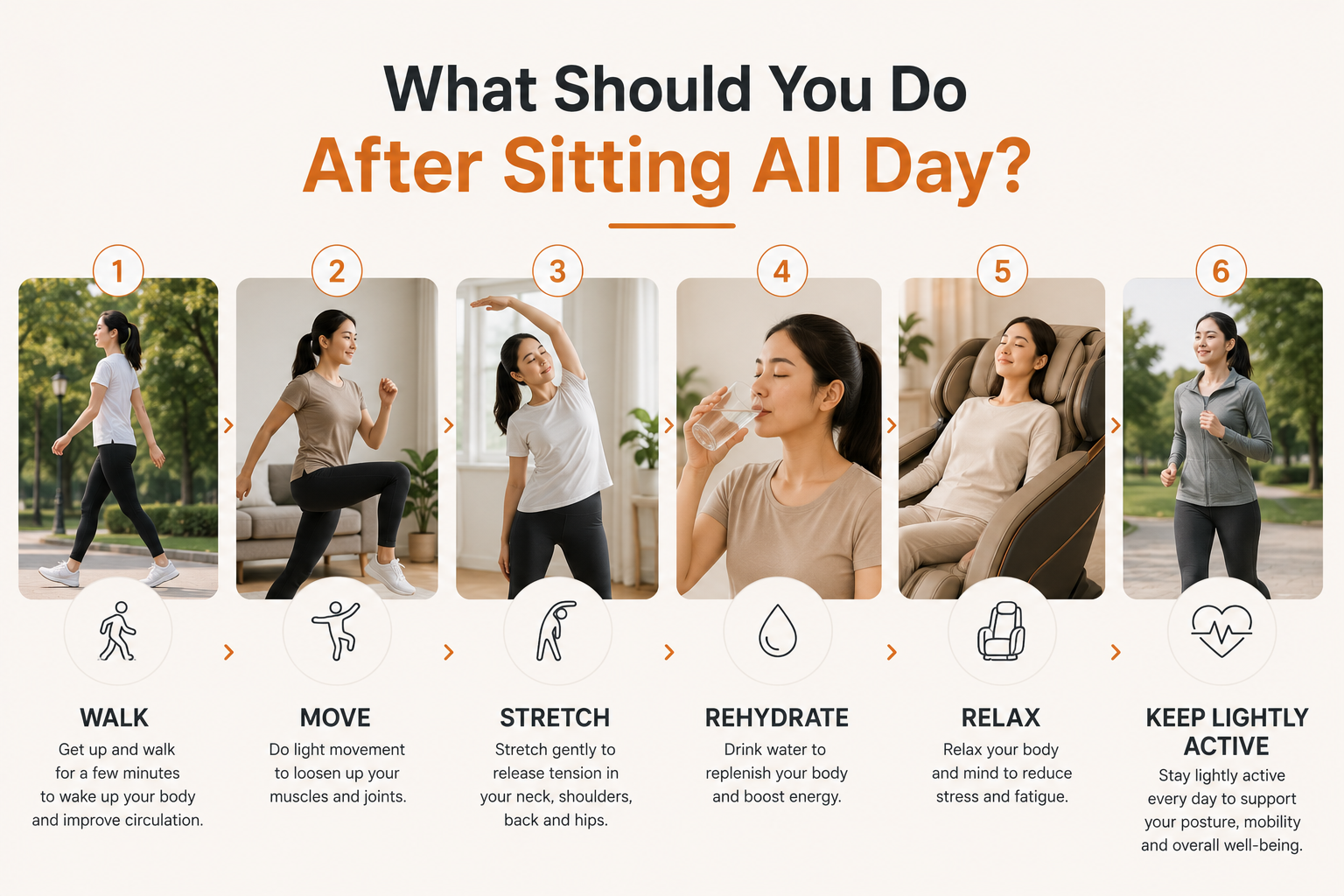
A useful after-work routine can be surprisingly simple:
Walk → Move → Stretch → Rehydrate → Relax → Keep lightly active
You don’t necessarily need special equipment.
The most important part is making the routine easy enough that you’ll actually repeat it.
Step 1: Walk Before You Sit Down Again
One of the easiest mistakes after a desk-based workday is going directly from one chair to another.
You leave your office chair, drive home, eat dinner and then spend the evening on the sofa.
Instead, introduce a short period of movement.
Try taking a 5–10 minute easy walk when you finish work or arrive home.
You could:
- Walk around your neighbourhood
- Take a short walk before getting into your car
- Walk around your apartment or condominium grounds
- Take your dog outside
- Walk while making a personal phone call
- Use the stairs for part of your journey
It doesn’t have to be a workout.
The purpose is simply to get your body moving after being relatively still.
Step 2: Loosen Your Neck and Shoulders
Your neck and shoulders are often among the first areas to feel tired after hours of computer work.
Start gently.
Try movements such as:
- Slow shoulder rolls
- Gentle neck turns from side to side
- Bringing your ear gently towards each shoulder
- Opening your arms to stretch your chest
- Reaching your arms overhead
Avoid forcing a stretch or making sudden movements.
A stretch should generally feel gentle rather than painful. If a movement causes pain, stop rather than trying to push further.
Step 3: Open Up Your Hips and Legs
Your upper body isn’t the only area affected by a desk-heavy day.
Your hips and legs have also spent hours in a relatively fixed position.
After your walk, spend a few minutes gently moving your lower body.
You might include:
- Standing quadriceps stretches
- Gentle hamstring stretches
- Calf stretches
- Hip flexor stretches
- Slow bodyweight squats if comfortable
- Ankle circles
You don’t need to perform every movement.
Choose three or four that feel comfortable and make them part of your regular routine.
Consistency is more useful than creating such a complicated routine that you stop doing it after a week.
Step 4: Rehydrate and Reset
Your after-work routine isn’t only about stretching.
Use these few minutes to mentally separate work time from personal time.
Put your laptop away.
Drink some water.
Change out of your work clothes.
Step away from work notifications where possible.
If you’ve spent the entire day moving between emails, meetings and screens, your mind may need a transition just as much as your body does.
This is where an evening wellness routine can become particularly valuable.
You’re creating a clear signal:
Work is finished. It’s time to slow down.
Step 5: Use Massage as Part of Your Wind-Down Routine
After you’ve moved and stretched, you may want a more passive way to relax.
This is where massage can fit naturally into an after-work routine.
Some people book occasional professional massage sessions. Others use smaller massage devices or incorporate a massage chair at home into their evening routine.
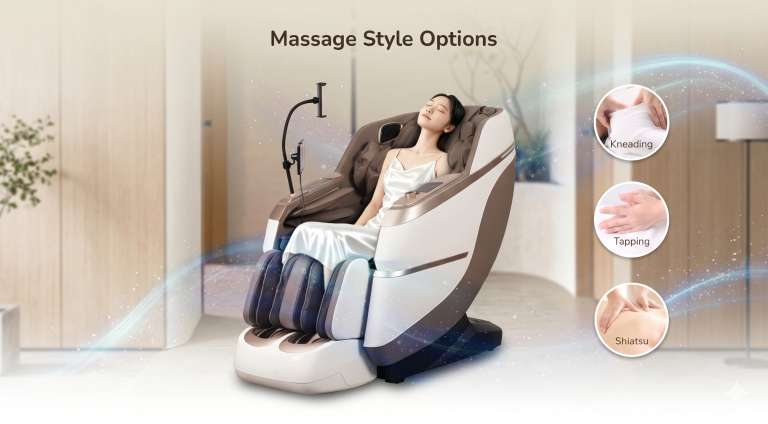
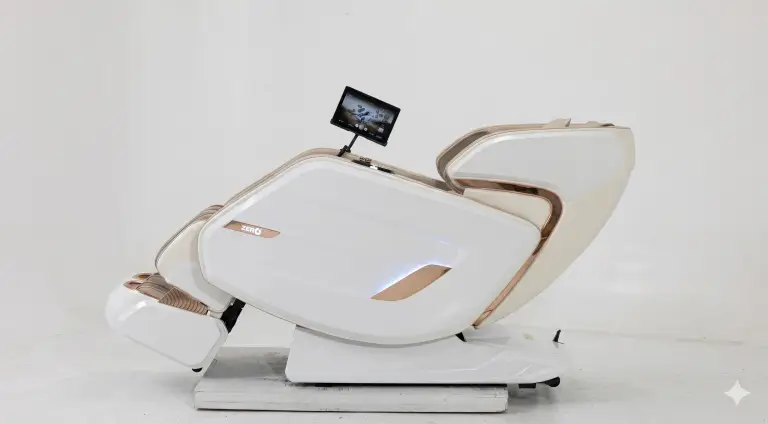
Modern massage chairs can combine features such as rollers, airbags, body scanning, reclining positions and automated massage programmes, depending on the model.
Rather than thinking of a massage chair as something you use only when you’re already uncomfortable, you can treat it as part of your regular home relaxation routine.
For example:
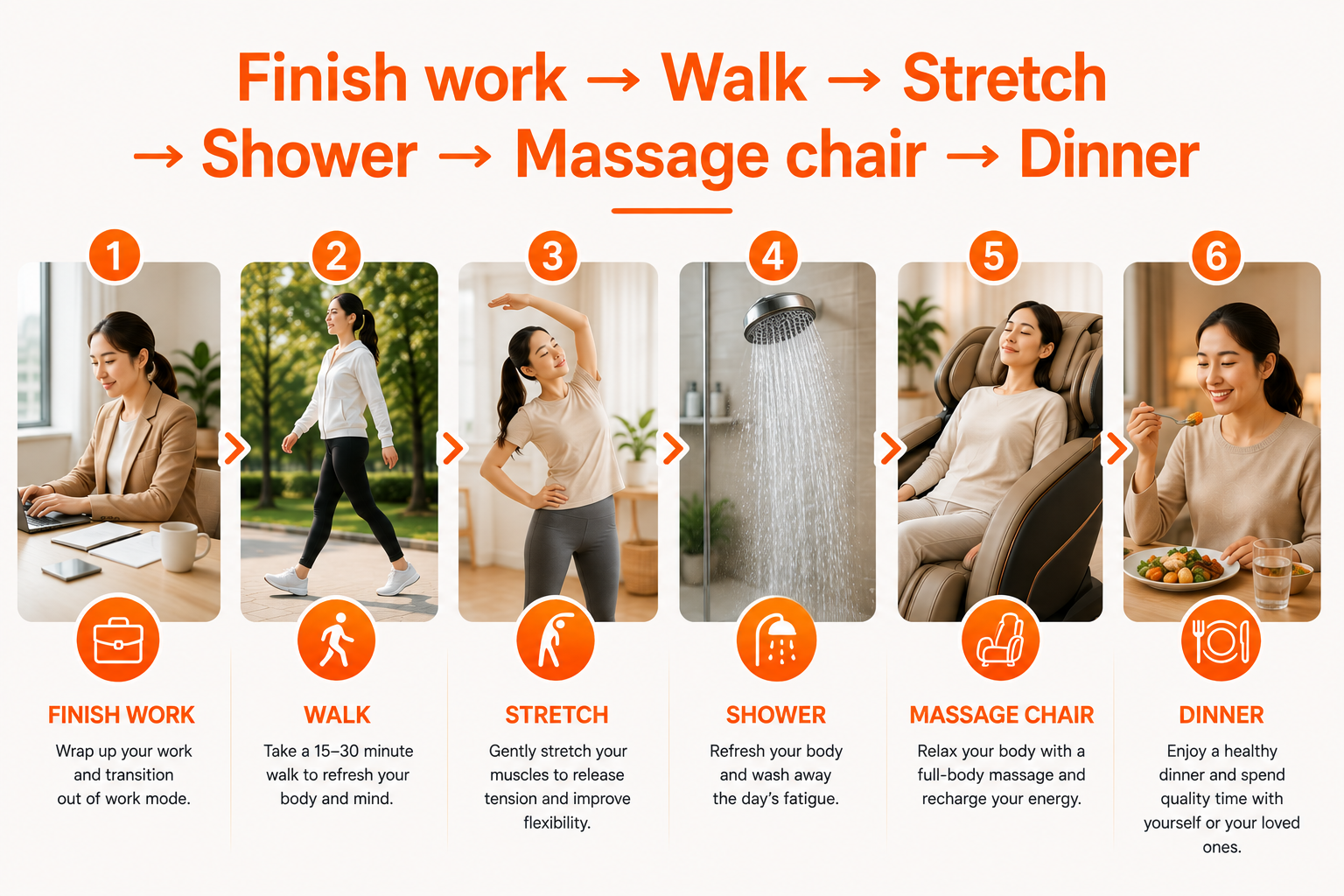
Finish work → Walk → Stretch → Shower → Massage chair → Dinner
Or:
Dinner → Light household activity → Massage chair → Read → Bed
The important distinction is that a massage chair complements movement; it doesn’t replace it.
If you’re considering adding one to your home wellness setup, you can explore Zero Healthcare massage chair options and compare different massage technologies and features.
Step 6: Keep Moving During Your Evening
Finishing your stretching routine doesn’t mean you need to spend the remaining four hours of your evening sitting.
Look for natural opportunities to stay lightly active.
That could mean:
- Cooking dinner
- Doing household chores
- Walking after dinner
- Playing with your children
- Watering plants
- Going grocery shopping
- Taking the stairs
- Doing a short home workout
None of these activities needs to feel like formal exercise.
The bigger idea is simple:
Don’t replace eight hours of office sitting with an entire evening of sitting.
A Simple 20-Minute After-Work Routine
If you’re wondering where to start, try this straightforward routine:
| Time | Activity |
|---|---|
| 0–5 minutes | Easy walking |
| 5–8 minutes | Shoulder and neck mobility |
| 8–12 minutes | Hip and leg stretches |
| 12–15 minutes | Water, change clothes and disconnect from work |
| 15–20 minutes | Relaxation or gentle massage with massage chair |
Have more time?
Extend your walk, do a workout, take a shower or enjoy a longer relaxation session.
Have less time?
Even a few minutes of movement is better than automatically dropping onto the sofa the moment you arrive home.
Don’t Wait Until After Work to Move
Your evening routine is useful, but there’s another important part of the equation:
Move during your working day too.
If possible, periodically stand up, stretch or walk briefly instead of remaining in the same seated position for hours.
Simple opportunities include:
- Standing while taking a phone call
- Walking to refill your water
- Taking the stairs
- Walking to speak to a colleague
- Stretching between meetings
- Alternating your working position where practical
- Taking a short walk during lunch
Even small breaks can interrupt long periods of sitting.
Your after-work routine then becomes what it should be: a way to relax and transition into your evening rather than an attempt to compensate for an entire day without movement.
Where a Massage Chair Fits Into an After-Work Routine
For people who frequently come home wanting to relax, convenience matters.
You might intend to stretch for 20 minutes every evening or book regular massages, but busy schedules don’t always cooperate.
A massage chair offers another option because the massage experience is available at home whenever you want to use it.
Depending on the model, features may include:
- Automated full-body massage programmes
- Roller massage
- Airbag compression
- Foot and calf massage
- Heat functions
- Zero gravity reclining
- Body scanning
- Stretch-focused programmes
Different chairs can also feel surprisingly different.
Roller intensity, seat width, legrest position, shoulder alignment and massage programmes can all influence your experience.
That’s why it’s worth trying several models rather than choosing purely from a specification sheet.
Zero Healthcare has massage chair models designed around different massage preferences, features and budgets. You can compare massage chair options online first.
If you’re unsure which massage style feels comfortable for your body, visit a showroom and test the chairs yourself.
Use the Zero Healthcare Store Locator to find a showroom near you.
Build a Routine You Can Actually Maintain
The best after-work routine isn’t necessarily the most sophisticated one.
It’s the one you can repeat.
You don’t need a complicated collection of exercises, equipment and recovery tools every evening.
Start with something simple:
Move a little. Stretch gently. Relax properly.
If your job requires long hours at a desk, also look for opportunities to break up your sitting time throughout the day.
Then, when work finishes, give yourself a short transition period before settling into the evening.
Whether that means taking a walk, stretching, enjoying a shower, spending some time in a massage chair or simply putting your phone away, the goal is the same:
Help your body and mind leave work mode behind.
Wellness note: Massage chairs and general stretching are intended for relaxation and wellness and are not substitutes for medical assessment or treatment. Persistent, severe or unexplained pain, numbness or other concerning symptoms should be discussed with an appropriate healthcare professional.