


Why Do My Hands and Feet Feel Weak or Numb? Understanding the Causes and How to Improve Blood Circulation
Why Do My Hands and Feet Feel Numb or Weak?
A brief episode of “pins and needles” can happen to almost anyone. You may sit cross-legged for too long, lean on your elbow, sleep on your arm or remain in the same position during a long drive. Once you move, the sensation often fades within a few minutes.
However, numbness that keeps returning, lasts a long time, spreads, affects both sides of the body or appears together with true weakness deserves closer attention. Hands and feet are supplied by long peripheral nerves and small blood vessels, so they may be among the first places where nerve compression, neuropathy or reduced blood flow becomes noticeable.
What Does Hand or Foot Numbness Mean?
Almost everyone has experienced “pins and needles” after sitting cross-legged or sleeping in an awkward position. Temporary numbness usually disappears within a few minutes after movement.
However, if your hands or feet frequently feel:
- Numb
- Tingling
- Weak
- Cold
- Heavy
- Less sensitive
it may be worth understanding what your body is trying to tell you.
Occasional numbness is usually harmless, but persistent symptoms should not be ignored, especially if they occur together with pain, muscle weakness, balance problems, or changes in skin colour.
First, Is It Numbness, Tingling or Muscle Weakness?
People often use these words interchangeably, but they describe different experiences. Identifying the main sensation helps a healthcare professional narrow down possible causes.
| What You Feel | How It Is Commonly Described | What It May Involve |
| Numbness | Reduced or absent feeling; the area feels “dead” or less sensitive | A sensory nerve problem, pressure on a nerve or reduced blood supply |
| Tingling | Pins and needles, prickling, buzzing or an electrical sensation | Temporary nerve pressure, peripheral neuropathy or irritation |
| Burning | Hot, painful or raw sensation, sometimes worse at night | Neuropathic pain or nerve irritation |
| True weakness | Difficulty lifting the foot, gripping objects, standing or climbing stairs | A muscle, motor nerve, spine or neurological problem |
| Heavy or tired legs | Legs feel fatigued after standing or walking | Deconditioning, venous issues, circulation problems or other causes |
Common Causes of Numbness in the Hands and Feet
There is no single cause. The pattern, timing, triggers and other symptoms matter. The following causes are common possibilities rather than a self-diagnosis checklist.
1. Temporary pressure on a nerve
Sitting, sleeping or leaning in one position can temporarily compress a nerve and its blood supply. The sensation usually improves after changing position.
Typical clue: Often short-lived and linked to posture.
2. Peripheral neuropathy
Damage to peripheral nerves may cause numbness, tingling, burning pain, reduced sensation, balance difficulty or weakness. Diabetes is a major cause, but neuropathy has many possible causes.
Typical clue: Often starts in the toes or feet and may gradually move upward.
3. Diabetes-related nerve damage
Long-term high blood sugar can damage nerves and blood vessels. Diabetic peripheral neuropathy commonly affects the feet first. Reduced sensation may make cuts, blisters or heat injuries harder to notice.
Typical clue: Daily foot inspection and medical follow-up are important.
4. Carpal tunnel or trapped nerves
Compression of the median nerve at the wrist can cause numbness in the thumb, index and middle fingers. A trapped nerve in the neck or back may send tingling or pain into an arm or leg.
Typical clue: May be linked to repetitive work, posture or spinal conditions.
5. Poor circulation or vascular disease
Reduced blood flow can cause coldness, colour changes, pain, tingling, numbness or leg weakness during walking. Causes can include narrowed arteries, smoking, diabetes and high blood pressure.
Typical clue: Persistent symptoms require medical evaluation.
6. Vitamin B12 deficiency
Vitamin B12 is important for healthy nerve function. A deficiency may cause tingling, numbness, balance problems or fatigue.
Typical clue: A blood test is needed; do not self-treat high-dose supplements without advice.
7. Raynaud phenomenon
Fingers or toes may become white, blue, cold or numb in response to cold or stress, then turn red as blood flow returns.
Typical clue: Colour change is an important clue.
8. Medication, alcohol or toxin exposure
Some chemotherapy drugs and other medicines can affect nerves. Heavy alcohol use and certain toxins may also contribute.
Typical clue: Discuss symptoms with the prescribing clinician; do not stop medicine abruptly.
Symptom Pattern Comparison
| Pattern | Possible Explanation | Recommended Next Step |
| Tingling after sitting cross-legged; resolves quickly | Temporary nerve pressure | Change position, move gently and monitor |
| Numbness in thumb, index and middle fingers, especially at night | Possible carpal tunnel syndrome | Discuss with a clinician if recurrent |
| Pain or tingling travelling from the lower back into one leg | Possible sciatica or nerve-root irritation | Medical assessment if persistent, severe or accompanied by weakness |
| Both feet gradually becoming numb or burning | Possible peripheral neuropathy | Arrange a medical evaluation; check diabetes and other causes |
| Cold, pale or bluish toes with walking pain | Possible circulation problem | Prompt medical assessment |
| Sudden numbness on one side with speech or facial changes | Possible stroke | Emergency medical care immediately |
| Numb diabetic foot with a blister or wound | Loss of protective sensation | Urgent clinical review; do not ignore the wound |
Can Poor Blood Circulation Cause Weak Legs?
Yes.
When muscles receive less oxygen-rich blood, they may fatigue more easily.
People often describe this as:
- Legs feel heavy
- Feet become tired quickly
- Difficulty standing for long periods
- Cold feet
- Reduced energy while walking
Although circulation can contribute to these symptoms, persistent weakness should always be assessed by a healthcare professional.
How to Support Healthy Blood Circulation Safely
Lifestyle changes support general cardiovascular and foot health, but they are not substitutes for diagnosis or prescribed treatment. Choose actions that are appropriate for your health status.
1. Move every 30 to 60 minutes
Stand, walk around the room or perform several gentle ankle pumps. Frequent short breaks are often easier to maintain than a single long exercise session.
2. Walk regularly
Walking activates the calf-muscle pump and supports cardiovascular fitness. Start at a comfortable pace and build gradually.
3. Perform simple ankle and calf movements
Ankle circles, heel raises and calf stretches can reduce stiffness after prolonged sitting. Stop if the movement causes pain, dizziness or worsening numbness.
4. Manage diabetes, blood pressure and cholesterol
These conditions can affect nerves and blood vessels. Follow your healthcare professional’s treatment plan and attend regular reviews.
5. Avoid smoking
Smoking damages blood vessels and increases the risk of narrowed arteries.
6. Stay hydrated and eat a balanced diet
Hydration and a diet rich in vegetables, fruit, whole grains and appropriate protein support overall health. Supplements should be guided by a confirmed deficiency.
7. Inspect your feet
People with diabetes or reduced sensation should check for cuts, blisters, redness, swelling, temperature changes and poorly fitting shoes.
8. Use relaxation tools appropriately
A foot wellness device can be used for comfort and relaxation when safe for the user, but should not delay medical assessment of recurring numbness.
How Zero Healthcare Medifeet Supports Daily Foot Wellness
After a long day, your feet work harder than almost any other part of your body.
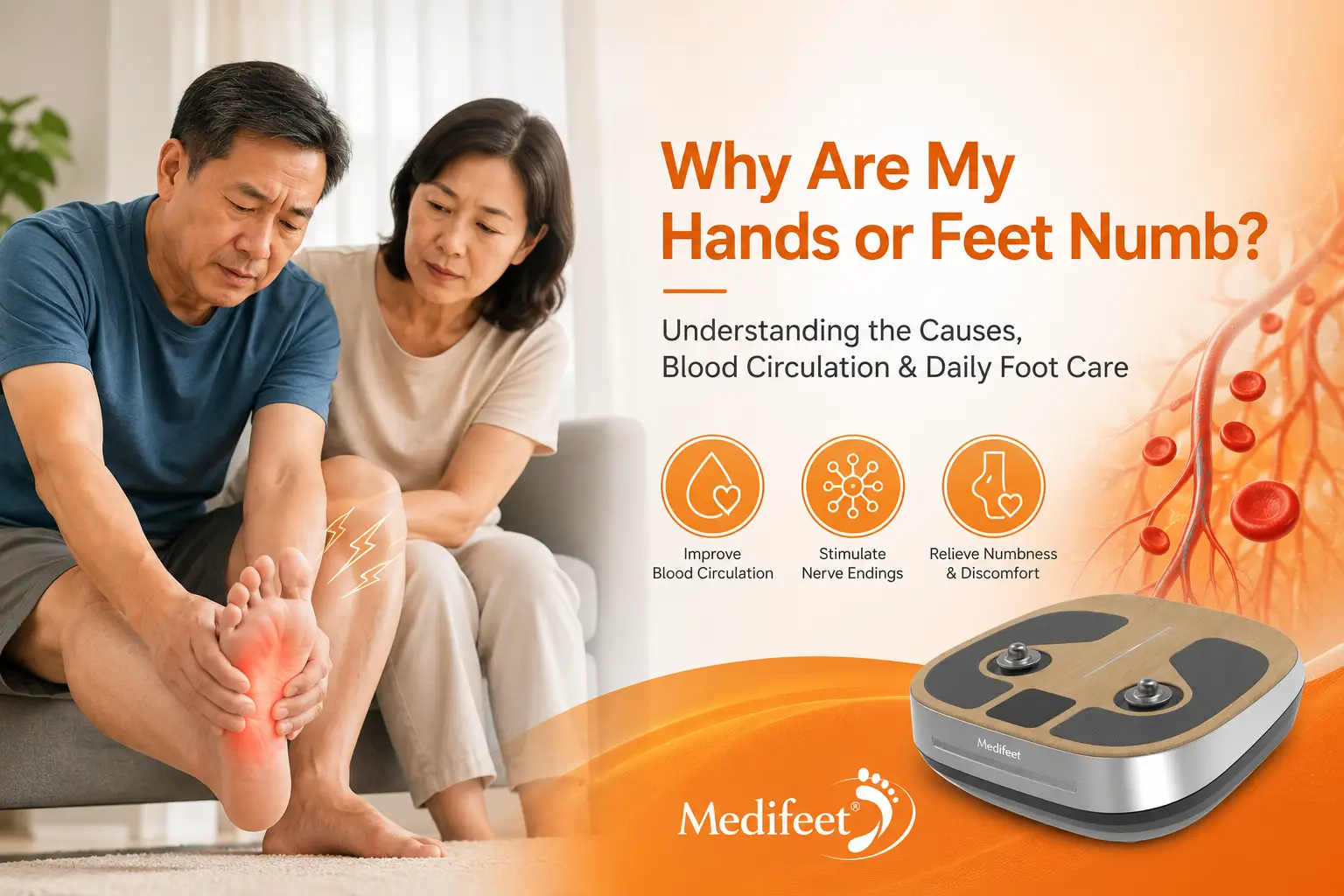
Zero Healthcare Medifeet is designed to provide relaxing vibration-based foot massage that supports everyday foot comfort.
Introducing Zero Healthcare Medifeet
Zero Healthcare Medifeet is designed as a convenient home wellness product for people who want vibration-based foot stimulation and a simple way to relax tired feet. It can fit into an evening routine after work, household activities, exercise or prolonged standing.
Key Medifeet Benefits for Everyday Wellness
- Vibration-based foot stimulation designed for relaxation
- Convenient home-use format
- Simple addition to an evening foot-care routine
- Suitable for adults who want a non-complex wellness experience
- Can complement regular movement, stretching and general self-care
Who Should Check With a Healthcare Professional Before Use?
Product instructions and contraindications should always be followed. As a general safety measure, people with the following situations should seek professional advice before using a foot vibration or massage device:
- Diabetes with reduced foot sensation or a history of ulcers
- Open wounds, infections, unexplained swelling or recent foot surgery
- Known peripheral arterial disease, blood clots or severe circulation problems
- A pacemaker or implanted medical device, where the product manual advises caution
- Pregnancy, significant neurological disease or any condition that affects sensation
- Sudden, severe or unexplained numbness or weakness
How to Build a Practical Foot-Wellness Routine
A sustainable routine combines movement, risk-factor management, foot observation and relaxation. It does not rely on one product alone.
| Step | What to Do | Why It Matters |
| 1. Observe | Notice when the numbness occurs, how long it lasts and whether it affects one or both sides | Patterns help a clinician identify possible causes |
| 2. Move | Break up sitting and perform comfortable lower-leg movements | Supports normal muscle-pump activity |
| 3. Protect | Wear well-fitting footwear and check the skin, especially with diabetes | Reduced sensation can hide injuries |
| 4. Manage | Follow treatment for diabetes, blood pressure, cholesterol or vitamin deficiency | Addresses underlying risk factors |
| 5. Relax | Use Medifeet or another suitable relaxation method according to instructions | Adds comfort without replacing medical care |
Myths and Facts About Numb Hands and Feet
| Myth | Fact |
| Numb feet always mean poor circulation. | Nerve compression and neuropathy are also common. The pattern must be assessed. |
| Only older people experience numbness. | Posture, repetitive work, injury, vitamin deficiency and medical conditions can affect adults of different ages. |
| A foot massager can cure numbness. | A wellness device may support relaxation, but recurring numbness needs the correct diagnosis. |
| If numbness does not hurt, it is harmless. | Loss of protective sensation can increase the risk of unnoticed burns, cuts and ulcers. |
| Exercise fixes every circulation problem. | Movement supports health, but narrowed arteries, blood clots and other diseases may require medical treatment. |
Frequently Asked Questions (FAQ)
Recurring numbness may be caused by nerve compression, peripheral neuropathy, diabetes, vitamin B12 deficiency, medication effects, spinal conditions or circulation problems. Because the causes differ, persistent symptoms should be assessed by a healthcare professional.
Yes. Reduced blood flow may contribute to coldness, tingling, numbness, colour changes or pain, especially in the legs and feet. However, nerve-related causes are also common.
Temporary stiffness, reduced muscle activity and pressure on nerves can make the legs feel heavy or unstable after prolonged sitting. True muscle weakness, repeated buckling or difficulty lifting the foot requires medical evaluation.
Regular walking, movement breaks, ankle pumps, calf strengthening, smoking cessation and management of diabetes, blood pressure and cholesterol support vascular health. A clinician should guide exercise if you have known heart or circulation disease.
Medifeet is intended for vibration-based foot relaxation and everyday wellness. It is not a treatment for neuropathy, diabetes, stroke, blood clots or peripheral arterial disease. Seek medical advice for persistent or unexplained numbness.
Final Thoughts
Numbness or weakness in the hands and feet should be understood as a symptom, not a diagnosis. A brief episode after an awkward position may be harmless, while recurring numbness can reflect nerve compression, neuropathy, diabetes, vitamin deficiency or a circulation problem. The safest approach is to observe the pattern, stay active within your ability, manage known health conditions and seek medical advice when symptoms persist or worsen.
For everyday relaxation, Zero Healthcare Medifeet can complement a broader foot-wellness routine that includes movement, comfortable footwear, regular foot checks and appropriate medical care. The goal is not to make unrealistic treatment claims, but to provide a convenient and enjoyable way to care for tired feet at home.